• Skip to primary navigation
  • Skip to main content
  • Skip to primary sidebar
Virtualization.com

Virtualization.com

News and insights from the vibrant world of virtualization and cloud computing

  • News
  • Featured
  • Partnerships
  • People
  • Acquisitions
  • Guest Posts
  • Interviews
  • Videos
  • Funding

What Should We Ask Steve Ballmer?

April 21, 2008 by Robin Wauters 1 Comment

Upcoming thursday, we’re sitting down with Microsoft CEO Steve Ballmer for a short Q&A session. We have some questions in mind for the man, but we thought it might be a good opportunity to ask you for feedback on what we should ask as well. Anything goes, but please avoid questions that could make him go crazy.

So give it us: what would you ask Steve Ballmer if you had the chance?

Post your question in the comments or get in touch directly.
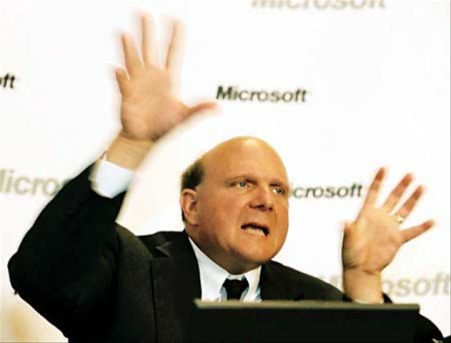
Steve Ballmer

Filed Under: Interviews Tagged With: Hyper-V, HyperV, microsoft, Microsoft Hyper-V, Steve Ballmer, virtualisation, virtualization

Free Virtualization Capacity Planning, Courtesy of Microsoft MAP

April 21, 2008 by Robin Wauters 1 Comment

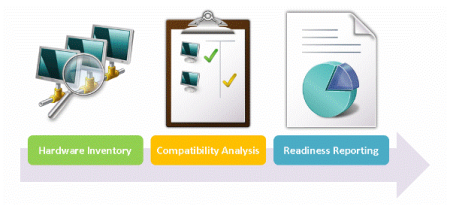
Are you familiar with the Microsoft Assessment and Planning Solution Accelerator (MAP)? If you’re not, you might want to be. From the resources library:

“MAP (download) is a powerful inventory, assessment, and reporting tool that can securely run in small or large IT environments without requiring the installation of agent software on any computers or devices. The data and analysis provided by this Solution Accelerator can significantly simplify the planning process for migrating to Windows Vista, Microsoft Office 2007, Windows Server 2008, Microsoft Application Virtualization (formerly SoftGrid), and Windows Server virtualization technologies including Virtual Server 2005 R2 and Windows Server 2008 Hyper-V.”

Microsoft Assessment and Planning Solution Accelerator

As Virtualization.info points out, Microsoft doesn’t seem to put much effort into making the tool known by the rest of the world. The tool could however be useful, and comes at a great price considering its feature list; it’s completely free!

Filed Under: News Tagged With: Assessment and Planning Solution Accelerator, Hyper-V, HyperV, microsoft, Microsoft Assessment and Planning Solution Accelerator, Microsoft Hyper-V, Microsoft MAP, virtualisation, virtualization, virtualization capacity planning

Desktone Introduces “Desktop Virtualization As A Service”

April 21, 2008 by Robin Wauters Leave a Comment

Desktone today announced the Desktone Virtual-D Platform, designed to enable service providers to offer hosted, subscription-based virtual desktops.

Desktone

From the press release:

Desktone’s solution helps enterprises quickly realize the full benefits of centralized virtual desktops without having to build and deploy the infrastructure internally. It dramatically reduces desktop TCO, transforming computing costs from fixed CAPEX to variable OPEX. Service providers benefit from optimizing use of their data center assets while delivering a new highly scalable, value-added service to customers.

The Virtual-D Platform aims to simplify large-scale virtual desktop provisioning and management, enable greater protection of corporate desktop assets, and deliver more consistent and reliable desktop service levels – all while reducing desktop total cost of ownership by $300-$800/desktop/year.

Desktone’s DaaS model consists of two distinct tiers: enterprise and service provider. The Virtual-D Platform integrates all VDI functionality while separating the enterprise and service provider tiers. This allows enterprises to manage a virtual desktop environment supported by physical resources owned and maintained by a third-party, and that reside either at the enterprise or at a service provider.

The Virtual-D Platform is already available as part of a hosted service through authorized Desktone partners. Enterprises can click here for more information. Service Providers who are interested in delivering Desktone-enabled DaaS can click here.

[Source: InformationWeek]

Filed Under: News Tagged With: DaaS, Desktone, Desktone Virtual-D Platform, desktop virtualization, virtual desktops, Virtual-D, Virtual-D Platform, virtualisation, virtualization

Hyper-V Quick Migration Breaks Network Connections, Says VMware

April 21, 2008 by Robin Wauters 2 Comments

Check out the following demo by Blip.tv account ‘VMware TV‘, expressing the difference between moving a VM from one physical server to another with downtime (Hyper-V Quick Migration) and VMware’s Vmotion, which offers zero downtime when transferring virtual machines.

Keith Ward over at Virtualization Review picked up the demo and writes about what happens in the video:

“The demo shows a Quick Migration of a Windows Server 2003 VM from one physical machine to another. At the same time, a Microsoft Dynamics client is trying to access a database residing on the VM. Through a constant ping of the VM, we can see how a) the connection to the VM is dropped for a time, and b) how the Dynamics client fails in its attempt to get the database information (an error box pops up, showing a TCP failure). Shortly thereafter, another popup informs us that the VM has actually been deleted. It’s re-started a few moments later.”

To be balanced, here’s what ‘Jeff’ recently posted on the Windows Virtualization Team blog:

After my last blog I received almost two dozen email telling me that VMotion was far superior for unplanned host downtime and that it was a much better HA solution because it could live migrate virtual machines. I’ve heard this fallacy espoused for many years and, folks, this simply isn’t the case.

In the case of unplanned downtime, VMotion can’t live migrate because there is no warning. Instead you must have VMware HA configured and the best it can do is restart the affected virtual machines on other nodes which is the same as what is provided with Windows Server 2008 Hyper-V and Failover Clustering.

Here are a couple of quotes from VMware’s own document, Automating High Availability (HA) Services with VMware HA.

Page 1 paragraph 2 states:

Using VMware HA, virtual machines are automatically restarted in the event of hardware failure…

Page 8 states:

How does VMware HA work?

VMware HA continuously monitors all ESX Server hosts in a cluster and detects failures. An agent placed on each host maintains a “heartbeat” with the other hosts in the cluster and loss of a heartbeat with the other hosts in the cluster and loss of a heartbeat initiates the process of restarting all affected virtual machines on other hosts.

HA monitors whether sufficient resources are available in the cluster at all times in order to be able to restart virtual machines on different physical host machines in the event of host failure.

The point being VMware HA and Hyper-V with failover clustering accomplish the same thing: virtual machines are RESTARTED on another node. No better, no worse. If you still don’t believe me, find one of your ESX Servers and go pull out the power plug. (Just don’t say I didn’t warn you.)

So what do you think about all this?

Filed Under: News Tagged With: Hyper-V, Hyper-V Quick Migration, Hyper-V RC, HyperV, live migration, microsoft, Microsoft Hyper-V, Quick Migration, virtualisation, virtualization, VMotion, vmware, VMware VMotion

Motorola Joins Investors Behind VirtualLogix (Update)

April 21, 2008 by Robin Wauters Leave a Comment

According to PC World, Motorola has joined Cisco, Intel and Texas Instruments in funding mobile virtualization company VirtualLogix (see our previous coverage). Update: the official release went over the wire.

VirtualLogix logo

VirtualLogix lets a user access two separate operating systems on the same handset with its VLX for Mobile Handsets product line – allowing them to share some resources like memory, but also keeping other areas, such as applications, securely apart.

Today, the company plans to announce that Motorola is a new investor in the company. Motorola is interested in VirtualLogix primarily for its mobile phones, but has also expressed an interest in using it for virtualization in its network equipment, reportedly said Peter Richards, CEO of VirtualLogix.

More when the official announcement comes in!

Update: the official word is in, but doesn’t provide much more details. Motorola made the equity investment through Motorola Ventures, its strategic capital arm, without disclosing the size of the investment.

Motorola joins VirtualLogix’s current investors Atlas Venture, Cisco Systems, DFJ Esprit, Index Ventures, Intel Capital and Texas Instruments. The company raised $16 million in series B last July, and got an extra (undisclosed) equity investment from Texas Instruments last December. The total amount invested in the company so far is $28 million, and the company says it is open to more strategic investors joining the club.

Noteworthy, however, is the comment that was added by our media contact, which shows Motorola’s ambition:

“Motorola is rising to the challenge of competing against competitors like the iPhone to develop disruptive new handsets, that will be less expensive to develop, while providing a much richer user experience. Virtualization can give one phone two different personalities, making it possible to switch between work functionality and fun applications, even between plans and accounts on one device.”

[Source: SMS Text News]

Filed Under: Funding Tagged With: Cisco, Funding, intel, mobile virtualization, Motorola, Motorola VirtualLogix, Peter Richards, Texas Instruments, virtualisation, virtualization, VirtualLogix, VirtualLogix VLX for Mobile Handsets, VLX for Mobile Handsets

Weekend Reading Tip: Virtualization in Comics

April 20, 2008 by Robin Wauters Leave a Comment

You may remember the Dilbert series on virtualization we featured here on Virtualization.com. The x86Virtualization bloggers went a little further and aggregated all comics they could find about the topic.

Go check it out!

Filed Under: Guest Posts Tagged With: comics, Dilbert, Dilbert virtualization, fun, virtualisation, virtualization, virtualization comics

  • « Go to Previous Page
  • Go to page 1
  • Interim pages omitted …
  • Go to page 327
  • Go to page 328
  • Go to page 329
  • Go to page 330
  • Go to page 331
  • Interim pages omitted …
  • Go to page 371
  • Go to Next Page »

Primary Sidebar

Tags

acquisition application virtualization Cisco citrix Citrix Systems citrix xenserver cloud computing Dell desktop virtualization EMC financing Funding Hewlett Packard HP Hyper-V IBM industry moves intel interview kvm linux microsoft Microsoft Hyper-V Novell oracle Parallels red hat research server virtualization sun sun microsystems VDI video virtual desktop Virtual Iron virtualisation virtualization vmware VMware ESX VMWorld VMWorld 2008 VMWorld Europe 2008 Xen xenserver xensource

Recent Comments

  • C program on Red Hat Launches Virtual Storage Appliance For Amazon Web Services
  • Hamzaoui on $500 Million For XenSource, Where Did All The Money Go?
  • vijay kumar on NComputing Debuts X350
  • Samar on VMware / SpringSource Acquires GemStone Systems
  • Meo on Cisco, Citrix Join Forces To Deliver Rich Media-Enabled Virtual Desktops

Copyright © 2025 · Genesis Sample on Genesis Framework · WordPress · Log in

  • Newsletter
  • Advertise
  • Contact
  • About