• Skip to primary navigation
  • Skip to main content
  • Skip to primary sidebar
Virtualization.com

Virtualization.com

News and insights from the vibrant world of virtualization and cloud computing

  • News
  • Featured
  • Partnerships
  • People
  • Acquisitions
  • Guest Posts
  • Interviews
  • Videos
  • Funding

News

Pano Logic Expands Virtualization Offering, Adds Support for WAN And VMware Virtual Desktop Manager (VDM)

April 14, 2008 by Robin Wauters Leave a Comment

Startup Pano Logic today announced a major new software release for its desktop virtualization solution. By leveraging existing virtual infrastructure and integrating hardware at the desktop with software in the data center, Pano Logic aims to provide the most complete and easiest-to-use virtual desktop solution on the market.

Pano Logic

The new release, Pano Virtual Desktop Solution (VDS) 2.0, can be deployed in new environments and network topologies, providing support for wide area network (WAN) deployments, dual monitor requirements, and offering certified support for wireless bridges and USB devices. Also, as a further extension of the partnership between Pano Logic and VMware, Pano VDS 2.0 fully integrates support for VMware Virtual Desktop Manager (VDM), giving users even greater deployment flexibility.

“Desktop virtualization solutions that leverage existing server virtualization infrastructure represent an opportunity for IT organizations to extend the value of their investments. Hosting virtual desktops on servers enables IT departments to eliminate the PC for portions of their userbase, thereby significantly reducing help desk support costs,” said Michael Rose, an IDC research analyst covering virtualization software. “We are seeing these virtual desktops increasingly being made accessible to users on the edge of the network, and as such the new WAN support available in Pano’s VDS 2.0 can help provide a more realistic and flexible environment for many users leveraging Pano Logic’s devices.”

The new features in Pano VDS 2.0:

  • Optimization for wide area network (WAN) deployments – enabling organizations to deploy Pano Logic at remote offices while keeping the desktop virtual machines and data storage secure in the corporate or regional data center.
  • Support for VMware Virtual Desktop Manager (VDM) – allowing for easy integration into existing desktop virtualization deployments which use the VDM interface for management, ensuring that users can leverage existing investments and use the management tools familiar to them.
  • Dual-monitor support – enabling easy administration of dual-monitor groups, providing users with the ability to easily roam to and from a dual-monitor workstation while optimizing their display settings.
  • Certification for wireless bridge and USB devices – allowing for wireless bridge certification which enables and certifies compatibility with a number of low-cost and widely available third-party wireless to Ethernet bridges, as well as extending support for composite USB devices such as personal digital assistants, cell phones, and combination printer/flash card readers. This new support enables Pano devices to replace PCs in critical support intensive point of service and point of sale environments.

[Source: eWeek]

Filed Under: News Tagged With: Pano Logic, Pano VDS 2.0, Pano Virtual Desktop Solution (VDS) 2.0, Pano Virtual Desktop Solution 2.0, virtual desktop manager, virtualisation, virtualization, vmware, VMware Virtual Desktop Manager, VMware Virtual Desktop Manager (VDM), WAN

HP To Support Citrix XenDesktop Across ProLiant Servers And Compaq Thin Clients

April 14, 2008 by Robin Wauters Leave a Comment

HP today announced it plans to support Citrix XenDesktop upon its availability next month across its HP ProLiant server and HP Compaq thin client product lines.

HP logo

Citrix XenDesktop, currently in beta, is a complete desktop virtualization solution that makes desktop delivery simple, secure and cost-effective. HP, one of the world’s leading thin-client providers, is delivering integrated access to XenDesktop deployments to provide customers with thin clients that enhance the user experience and reduce IT costs through what the company dubs “simplified lifecycle management”.

“HP offers a broad range of desktop solutions that make virtualization a reality for a very wide range of worker and IT infrastructure types,” said Roberto Moctezuma, vice president and general manager, Desktop Solutions Organization, HP. “The combination of HP virtualization and Citrix’s XenDesktop will provide IT departments with an excellent solution for simple and secure management of their desktop base while providing users an optimal computing experience.”

The addition of XenDesktop support also builds on HP’s recent introduction of HP ProLiant iVirtualization powered by Citrix XenServer. This combination allows HP customers to easily take advantage of Citrix’s full application and desktop delivery solutions to help make their IT infrastructures more flexible and dynamic from the desktop to the data center.

[Source: press release]

Filed Under: News, Partnerships Tagged With: citrix, Citrix XenDesktop, Hewlett Packard, HP, HP Citrix, HP Compaq, HP ProLiant, virtualisation, virtualization, XenDesktop

VMware Fusion Worth Only $ 40?

April 11, 2008 by Robin Wauters Leave a Comment

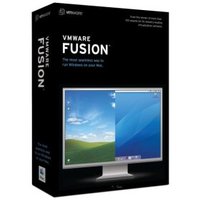
VMware Fusion

Well spotted by Kevin Tofel: Amazon has knocked of $20 of the price of VMware Fusion, which brings the price down to $59.99 from the $79.99 list price. On top of that is a $20 mail-in rebate which gets the software for $39.99, free shipping included. Pretty hot deal, indeed.

Filed Under: News Tagged With: Amazon, virtualisation, virtualization, vmware, VMWare Fusion

Illumita Renames Itself To Skytap, Launches Skytap Virtual Lab And Appoints Scott Roza As CEO

April 10, 2008 by Robin Wauters 2 Comments

Seattle-based virtualization startup Illumita has changed its name to Skytap and unveiled details around its first product, dubbed Skytap Virtual Lab. The company was started as a project by University of Washington computer scientists.

Skytap logo

Skytap raised $6 million in Series A funding last summer from Madrona Venture Group, Ignition Partners, Bezos Expeditions and WRF Capital, and is now also announcing Scott Roza as CEO.

Roza, who joined the company earlier this year after stints at Hewlett Packard, iConclude and ADIC, said he was excited to work with some of the former board members from iConclude on “a product that sits at the crossroads of three hot areas of technology: virtualization, cloud computing and software as a service”.

Skytap Virtual Lab is a virtual lab automation solution available as a service over the Web. It enables application development and test teams to provision lab infrastructure on demand (including servers, software, networking and storage) and utilize a powerful virtual lab management application to automate the set-up, testing and tear down of complex, multi-tiered environments. It also gives distributed teams the capability to collaborate and rapidly resolve software defects using a virtual lab and virtual project environment.

“Skytap provides customers with cloud-based services that enable them to capitalize on the wave of virtualization technology sweeping the industry,” said Scott Roza, chief executive officer of Skytap. “Cloud computing is gaining traction because a growing percentage of companies are demanding solutions that deliver value quickly, scale with business need, and don’t have the risk of an in-house implementation. Skytap’s Virtual Lab, which combines cloud-based virtualized infrastructure with an industry leading lab automation application, has tremendous potential to improve the timely delivery of quality applications to the business while increasing lab efficiency and lowering cost.”

[Source: Seattlepi.com]

Filed Under: News, People Tagged With: Illumita, Scott Roza, Skytap, Skytap Virtual Lab, virtualisation, virtualization

Parallels Server Beta 3 Hits The Streets

April 10, 2008 by Robin Wauters Leave a Comment

Parallels has released Parallels Server beta 3. The update includes an integrated toolset that includes Parallels Tools, Parallels Image Tool and Parallels Transporter (a P2V and V2V migration tool) to the hypervisor solution for server virtualization.

Parallels Server Beta

Built on Parallels’ bare metal hypervisor architecture and award-winning hypervisor-based virtualization technology, Parallels Server for Mac enables organizations to:

  • Standardize server hardware platforms
  • Effectively consolidate server resources
  • Consolidate and support legacy OSes and applications
  • Streamline server and application deployment, maintenance and management
  • Simplify software testing and development
  • Optimize server and application availability

More info here, download here.

Filed Under: News Tagged With: Parallels, Parallels Image Tool, Parallels Server, Parallels Server Beta, Parallels Server Beta 3, Parallels Tools, Parallels Transporter, virtualisation, virtualization

IBM Unveils Research Initiative PHANTOM, Aims To Protect Virtual Servers Better

April 10, 2008 by Robin Wauters Leave a Comment

IBM recently announced a breakthrough in safeguarding virtual server environments and introduced new software to help businesses better manage risk. The company said the advances can provide businesses with substantial improvements in securing information, applications, and IT infrastructures around the globe.

IBM logo

IBM, the company that pioneered the concept of virtualization with its mainframe systems, is tackling the security issue with Project PHANTOM, an initiative that’s so secret that IBM won’t even say what the name means. This is part of the announcement that was made:

IBM’s PHANTOM initiative aims to create virtualization security technology to efficiently monitor and disrupt malicious communications between virtual machines without being compromised. In addition, full visibility of virtual hardware resources would allow PHANTOM to monitor the execution state of virtual machines, protecting them against both known and unknown threats before they occur. It is also designed to increase the security posture of the hypervisor — a critical point of vulnerability; because once an attacker gains control of the hypervisor, they gain control of all of the machines running on the virtualized platform. For the first time, the hypervisor — the gateway to the virtualized world and all that lays above it — can be locked down.

Ars Technica had a call with the people at IBM. The company was still not willing to talk in any detail about it, but I did learn some important information that answers the questions I raised in my original post, which I’ve included below in its own section.

For starters, PHANTOM is not one particular technology, but rather a widespread research initiative within IBM that will eventually result in a range of products, services, best practices whitepapers, etc.. The initiative was started two years ago as a collaboration among various hardware and software groups within IBM, and has since expanded to embrace some third parties whose identities IBM isn’t revealing just yet. The internal groups involved in the initiative include IBM’s X-Force Threat Analysis Service (a division of IBM’s Internet Security Systems), IBM Watson research center, and the server platform groups behind the z- and p-series servers, among others.

IBM stressed to me that the initiative will produce results for a wide variety of hardware/software combinations, including x86 systems, Windows, Linux, POWER, and others. So the scope of PHANTOM, broadly defined, includes all virtualization platforms, products, and services.

Clearly, whatever else it is, PHANTOM is also extremely ambitious. It’s also still mostly under wraps, so we’ll have to wait for more announcements before giving further details.

Filed Under: News Tagged With: IBM, IBM PHANTOM, PHANTOM, Project PHANTOM, research, virtual server, virtualisation, virtualization, virtualization security

  • « Go to Previous Page
  • Go to page 1
  • Interim pages omitted …
  • Go to page 214
  • Go to page 215
  • Go to page 216
  • Go to page 217
  • Go to page 218
  • Interim pages omitted …
  • Go to page 240
  • Go to Next Page »

Primary Sidebar

Tags

acquisition application virtualization Cisco citrix Citrix Systems citrix xenserver cloud computing Dell desktop virtualization EMC financing Funding Hewlett Packard HP Hyper-V IBM industry moves intel interview kvm linux microsoft Microsoft Hyper-V Novell oracle Parallels red hat research server virtualization sun sun microsystems VDI video virtual desktop Virtual Iron virtualisation virtualization vmware VMware ESX VMWorld VMWorld 2008 VMWorld Europe 2008 Xen xenserver xensource

Recent Comments

  • C program on Red Hat Launches Virtual Storage Appliance For Amazon Web Services
  • Hamzaoui on $500 Million For XenSource, Where Did All The Money Go?
  • vijay kumar on NComputing Debuts X350
  • Samar on VMware / SpringSource Acquires GemStone Systems
  • Meo on Cisco, Citrix Join Forces To Deliver Rich Media-Enabled Virtual Desktops

Copyright © 2025 · Genesis Sample on Genesis Framework · WordPress · Log in

  • Newsletter
  • Advertise
  • Contact
  • About