• Skip to primary navigation
  • Skip to main content
  • Skip to primary sidebar
Virtualization.com

Virtualization.com

News and insights from the vibrant world of virtualization and cloud computing

  • News
  • Featured
  • Partnerships
  • People
  • Acquisitions
  • Guest Posts
  • Interviews
  • Videos
  • Funding

News

Blue Lane Releases VirtualShield 4.2

April 21, 2008 by Robin Wauters 1 Comment

Blue Lane Technologies today announced the general availability of VirtualShield 4.2, which it claims to be the first virtualization security solution to include inter-VM flow analytics and enforcement, application-aware partitioning (VMwall), and a robust set of application, protocol and vulnerability security policy controls.
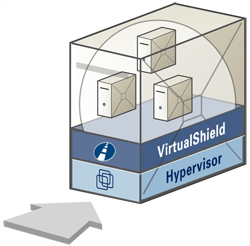
VirtualShield

These capabilities in the latest release of VirtualShield, enhanced by VMware VirtualCenter integration, allow Blue Lane’s layer 7 architecture to apply granular application/protocol/port-based policy enforcement on the flows between VMs. According to the press release, VirtualShield’s accuracy, comprehensive protection and minimal processing requirements make it the first IPS capable of protecting virtualized production data centers from network-based attacks.

VirtualShield 4.2 includes:

  • Advanced flow analytics and policy enforcement by cluster, host, VM, data center, OS, application or protocol;
  • VMwall – Blue Lane’s Integrated application-aware firewall enforcement by cluster, host, VM, data center, OS, application or protocol;
  • A rich array of inbound/outbound application policy controls for intra-flow policy;
  • Protocol integrity check for aligning ports with appropriate protocols and services; and
  • A vulnerability policy framework to proactively protect VMs from attacks like SQL injections, cross-site scripting and http smuggling.

Blue Lane VirtualShield 4.2 will be available May 15. Current VirtualShield customers will receive the upgrade as part of their support plan.

Filed Under: News Tagged With: Blue Lane, Blue Lane Technologies, Blue Lane VirtualShield, Blue Lane VirtualShield 4.2, virtualisation, virtualization, VirtualShield, VirtualShield 4.2, VMWall, vmware, vmware virtualcenter

Parallels Sells 1 Million Copies of Parallels Desktop, Says Apple Should Be Thankful

April 21, 2008 by Robin Wauters Leave a Comment

Next Wednesday, Parallels will announce that it has sold the 1 millionth copy of Parallels Desktop for Mac. In one breath, they’re linking this number to the global Apple Mac market share, which has climbed from approximately 3% to nearly 7% in just under two years since Parallels Desktop for Mac was released.

Parallels

Coincidence? We don’t think so. Parallels Desktop for Mac has basically eliminated the wall that previously existed between PCs and Macs. Now, everyone who wants a Mac can buy one without compromise and still run all their favorite Windows applications — something to keep in mind as Apple prepares to release quarterly results on Wednesday.

“Parallels Desktop not only broke down the barrier between the Mac and PC worlds, it also broke down the barrier that kept desktop virtualization from becoming a mainstream technology for consumers and professional users,” said Serguei Beloussov, CEO of Parallels. “We will continue innovating to extend our position as the desktop virtualization leader and provide our users with the fastest, easiest and most seamless solution available.”

Marketing Director Ben Rudolph told us at VMworld Europe that they were nearing 900 000 sold copies just 2 months ago (video interview here, around the 1:15 mark), which means their sales should average about 50 000 units per month.

Impressive sales figures, indeed. But linking these results publicly with Apple’s growing market share (coincidentally, right before Apple intends to release its quarterly results) is nothing but a bold statement that can hardly be proved by factual evidence.

Maybe Parallels is actually fishing for an acquisition by Steve Jobs himself? 🙂

Filed Under: News Tagged With: Apple, desktop virtualization, Parallels, Parallels Desktop, Parallels Desktop for Mac, Parallels Virtualization, virtualisation, virtualization

Free Virtualization Capacity Planning, Courtesy of Microsoft MAP

April 21, 2008 by Robin Wauters 1 Comment

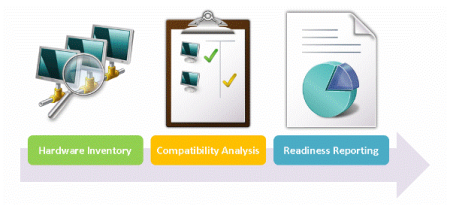
Are you familiar with the Microsoft Assessment and Planning Solution Accelerator (MAP)? If you’re not, you might want to be. From the resources library:

“MAP (download) is a powerful inventory, assessment, and reporting tool that can securely run in small or large IT environments without requiring the installation of agent software on any computers or devices. The data and analysis provided by this Solution Accelerator can significantly simplify the planning process for migrating to Windows Vista, Microsoft Office 2007, Windows Server 2008, Microsoft Application Virtualization (formerly SoftGrid), and Windows Server virtualization technologies including Virtual Server 2005 R2 and Windows Server 2008 Hyper-V.”

Microsoft Assessment and Planning Solution Accelerator

As Virtualization.info points out, Microsoft doesn’t seem to put much effort into making the tool known by the rest of the world. The tool could however be useful, and comes at a great price considering its feature list; it’s completely free!

Filed Under: News Tagged With: Assessment and Planning Solution Accelerator, Hyper-V, HyperV, microsoft, Microsoft Assessment and Planning Solution Accelerator, Microsoft Hyper-V, Microsoft MAP, virtualisation, virtualization, virtualization capacity planning

Desktone Introduces “Desktop Virtualization As A Service”

April 21, 2008 by Robin Wauters Leave a Comment

Desktone today announced the Desktone Virtual-D Platform, designed to enable service providers to offer hosted, subscription-based virtual desktops.

Desktone

From the press release:

Desktone’s solution helps enterprises quickly realize the full benefits of centralized virtual desktops without having to build and deploy the infrastructure internally. It dramatically reduces desktop TCO, transforming computing costs from fixed CAPEX to variable OPEX. Service providers benefit from optimizing use of their data center assets while delivering a new highly scalable, value-added service to customers.

The Virtual-D Platform aims to simplify large-scale virtual desktop provisioning and management, enable greater protection of corporate desktop assets, and deliver more consistent and reliable desktop service levels – all while reducing desktop total cost of ownership by $300-$800/desktop/year.

Desktone’s DaaS model consists of two distinct tiers: enterprise and service provider. The Virtual-D Platform integrates all VDI functionality while separating the enterprise and service provider tiers. This allows enterprises to manage a virtual desktop environment supported by physical resources owned and maintained by a third-party, and that reside either at the enterprise or at a service provider.

The Virtual-D Platform is already available as part of a hosted service through authorized Desktone partners. Enterprises can click here for more information. Service Providers who are interested in delivering Desktone-enabled DaaS can click here.

[Source: InformationWeek]

Filed Under: News Tagged With: DaaS, Desktone, Desktone Virtual-D Platform, desktop virtualization, virtual desktops, Virtual-D, Virtual-D Platform, virtualisation, virtualization

Hyper-V Quick Migration Breaks Network Connections, Says VMware

April 21, 2008 by Robin Wauters 2 Comments

Check out the following demo by Blip.tv account ‘VMware TV‘, expressing the difference between moving a VM from one physical server to another with downtime (Hyper-V Quick Migration) and VMware’s Vmotion, which offers zero downtime when transferring virtual machines.

Keith Ward over at Virtualization Review picked up the demo and writes about what happens in the video:

“The demo shows a Quick Migration of a Windows Server 2003 VM from one physical machine to another. At the same time, a Microsoft Dynamics client is trying to access a database residing on the VM. Through a constant ping of the VM, we can see how a) the connection to the VM is dropped for a time, and b) how the Dynamics client fails in its attempt to get the database information (an error box pops up, showing a TCP failure). Shortly thereafter, another popup informs us that the VM has actually been deleted. It’s re-started a few moments later.”

To be balanced, here’s what ‘Jeff’ recently posted on the Windows Virtualization Team blog:

After my last blog I received almost two dozen email telling me that VMotion was far superior for unplanned host downtime and that it was a much better HA solution because it could live migrate virtual machines. I’ve heard this fallacy espoused for many years and, folks, this simply isn’t the case.

In the case of unplanned downtime, VMotion can’t live migrate because there is no warning. Instead you must have VMware HA configured and the best it can do is restart the affected virtual machines on other nodes which is the same as what is provided with Windows Server 2008 Hyper-V and Failover Clustering.

Here are a couple of quotes from VMware’s own document, Automating High Availability (HA) Services with VMware HA.

Page 1 paragraph 2 states:

Using VMware HA, virtual machines are automatically restarted in the event of hardware failure…

Page 8 states:

How does VMware HA work?

VMware HA continuously monitors all ESX Server hosts in a cluster and detects failures. An agent placed on each host maintains a “heartbeat” with the other hosts in the cluster and loss of a heartbeat with the other hosts in the cluster and loss of a heartbeat initiates the process of restarting all affected virtual machines on other hosts.

HA monitors whether sufficient resources are available in the cluster at all times in order to be able to restart virtual machines on different physical host machines in the event of host failure.

The point being VMware HA and Hyper-V with failover clustering accomplish the same thing: virtual machines are RESTARTED on another node. No better, no worse. If you still don’t believe me, find one of your ESX Servers and go pull out the power plug. (Just don’t say I didn’t warn you.)

So what do you think about all this?

Filed Under: News Tagged With: Hyper-V, Hyper-V Quick Migration, Hyper-V RC, HyperV, live migration, microsoft, Microsoft Hyper-V, Quick Migration, virtualisation, virtualization, VMotion, vmware, VMware VMotion

YuuZoo Deploys Virtual Iron Solution To Streamline IT Infrastructure

April 17, 2008 by Robin Wauters Leave a Comment

Virtual Iron today announced that YuuZoo, one of the world’s premier, mobile content aggregators, is deploying Virtual Iron’s solution across its content management system and mobile content distribution platforms in Singapore and the US. The company expects significant benefit from the software, including reduction of its server environment by almost half, streamlined management of its computing environment, easy provisioning and set-up of systems for new users, and cost-efficient business continuity capabilities. YuuZoo is working with ICSP Solutions out of Singapore to deploy the Virtual Iron solution.

YuuZoo

“We tested out pretty much all of the virtualization offerings before ICSP introduced the Virtual Iron solution,” said Anthony Cacciola, CTO for YuuZoo in Singapore. “The Virtual Iron feature set is comprehensive yet easy to use and manage. This is a solution that can deliver on our needs now and continue to meet them as we grow and expand our virtualization initiative.”

YuuZoo has built a global distribution network that enables personalized distribution of wireless value-added services and advertising to billions of mobile end users, offering wireless content owners and developers, advertisers and media companies exciting new revenue possibilities. The YuuZoo network includes access to more than 200 leading wireless carriers, portals and wireless phone manufacturers in over 50 countries across the globe, enabling a reach to more than half of the world’s 3 billion mobile subscribers. The upstream media network includes hundreds of leading wireless content developers and owners giving YuuZoo one of the world’s largest content libraries designed specifically for mobile phone use.

The company currently supports about 50 internal users in four offices and mobile applications located in four different co-location sites using 40 servers in its Windows/Linux environment. Working with ICSP Solutions, Virtual Iron and Dell, YuuZoo expects to reduce its number of servers to eight. In addition to the savings on servers, the company also expects significant reductions in its power, cooling and space requirements. Using two Dell blade server (4 Blades each) SANs and Virtual Iron, YuuZoo has also been able reduce its co-location space from four sites to two, significantly reducing its hosting costs.

Virtual Iron combines an open source hypervisor with advanced virtualization services and policy-based automation capabilities. It also includes an automated X2V conversion software solution that enables customers to easily migrate workloads (data, applications, and operating systems) across physical, virtual, blade and image-based infrastructures in any direction. Virtual Iron also takes full advantage of the latest hardware–assisted virtualization capabilities from Intel and AMD to deliver near native performance. The software offers large memory support (up to 128 GB), large SMP capabilities (up to 8 virtual CPUs) and the ability to virtualize server platforms with up to 32 physical CPUs.

[Source: VMBlog]

Filed Under: News, Partnerships Tagged With: Anthony Cacciola, iSCP Solutions, Virtual Iron, virtualisation, virtualization, YuuZoo

  • « Go to Previous Page
  • Go to page 1
  • Interim pages omitted …
  • Go to page 211
  • Go to page 212
  • Go to page 213
  • Go to page 214
  • Go to page 215
  • Interim pages omitted …
  • Go to page 240
  • Go to Next Page »

Primary Sidebar

Tags

acquisition application virtualization Cisco citrix Citrix Systems citrix xenserver cloud computing Dell desktop virtualization EMC financing Funding Hewlett Packard HP Hyper-V IBM industry moves intel interview kvm linux microsoft Microsoft Hyper-V Novell oracle Parallels red hat research server virtualization sun sun microsystems VDI video virtual desktop Virtual Iron virtualisation virtualization vmware VMware ESX VMWorld VMWorld 2008 VMWorld Europe 2008 Xen xenserver xensource

Recent Comments

  • C program on Red Hat Launches Virtual Storage Appliance For Amazon Web Services
  • Hamzaoui on $500 Million For XenSource, Where Did All The Money Go?
  • vijay kumar on NComputing Debuts X350
  • Samar on VMware / SpringSource Acquires GemStone Systems
  • Meo on Cisco, Citrix Join Forces To Deliver Rich Media-Enabled Virtual Desktops

Copyright © 2025 · Genesis Sample on Genesis Framework · WordPress · Log in

  • Newsletter
  • Advertise
  • Contact
  • About