
• Skip to primary navigation
  • Skip to main content
  • Skip to primary sidebar
Virtualization.com

Virtualization.com

News and insights from the vibrant world of virtualization and cloud computing

  • News
  • Featured
  • Partnerships
  • People
  • Acquisitions
  • Guest Posts
  • Interviews
  • Videos
  • Funding

MS

VMware, Cisco Join Microsoft Server Virtualization Validation Program

August 19, 2008 by Robin Wauters 1 Comment

Microsoft’s Server Virtualization Validation Program, which was first announced in November 2007, and launched last June with the patricipation of Citrix, Sun, Novell and Virtual Iron, signed up two notable new members.

Cisco has announced its membership and is already included on the SVVP website, and VMware signed up pretty late so they’re not on there yet (but Chris Wolf had already confirmed the news). Microsoft and VMware had been working diligently for several months on the completion of their support agreement and VMware’s inclusion in the SVVP, and this will evidently drive virtualization adoption even further the coming months and years.

The costs associated with joining the program include membership in TSAnet at Mission Critical level, so that the vendor and Microsoft can share support information, incremental costs, if any, to perform the validation tests, and a nominal expense (currently $250) to qualify each ‘configuration’ that is submitted for validation.
Microsoft

Filed Under: Featured, News, Partnerships Tagged With: Cisco, citrix, microsoft, Microsoft Server Virtualization Validation Program, Microsoft SVVP, MS, MS Server Virtualization Validation Program, Novell, server virtualization, Server Virtualization Validation Program, sun, SVVP, Virtual Iron, virtualisation, virtualization, vmware

Microsoft To CIOs: “Virtualization Is Too Expensive”

March 17, 2008 by Robin Wauters 1 Comment

At the European CIO summit, Barbara Gordon, Microsoft’s EMEA VP for Enterprise Sales stated that Microsoft sees price as a differentiator in the virtualization market.

“What I hear is that users need to take out cost from their environments and virtualization is the credible approach. You have to ask if virtualization today is delivering cost effective value? And that it justifies the costs that are being charged?” She added, “Price is a differentiator. Existing players are quite expensive. Microsoft can add value to this market with a server play and an application play.”

Asked if the Microsoft Hyper V would have different versions that would offer different levels of functionality similar to those offered by VMware Gordon would not be drawn, according to Australian PC World.

“The time of individual point products is lessening. Our approach will be take a look at the environment, and make sure that the right virtualization functionality fits that environment. The fact is that it is the technologies that work well together and have good functionality that will let the user spend time adding value. So we’ve got a very broad offering.”

Martin Niemer, Senior Product Marketing Manager at VMware (yes, also the one that said Dell would soon start shipping servers with VMware ESX Server 3i included free of charge, said:

“We’re not seeing any signs that customers don’t understand all of the issues associated to moving to virtualization. They understand that what it comes down to is that even the hyper visor is zero cost, which Hyper V won’t be, the question is how many virtual machines can you run on a server. If you can’t run that many you still have to run it on two servers and that doubles your cost. That’s really going to be the decision point. It depends on what users want. If you want basic partitioning you can buy a server with a Vmware ESX 3i integrated hyper visor or buy a foundation version of ESX. And if you want additional functionality such as high availability you can buy a slightly more expensive licence.”

Niemer said he didn’t foresee Vmware being forced to adjust its pricing when Hyper V came to market.

We’ll see.

Filed Under: News, People Tagged With: Barbara Gordon, European CIO summit, Hyper-V, Martin Niemer, microsoft, MS, virtualisation, virtualization, vmware, VMWare ESX Server, VMware ESX Server 3i

Dell Reportedly Plans To Give Away VMware ESX Server 3i For Free, World Keeps Turning

March 15, 2008 by Robin Wauters 4 Comments

According to The Inquirer, it appears Dell is considering to stop charging VMware ESX Server 3i licensing fees on its PowerEdge servers to its customers. This was reportedly said by VMWare’s Senior Product Marketing Manager Martin Niemer and comes two weeks after the virtualization vendor announced it would start embedding the 32 MB hypervisor across Dell, Fujitsu-Siemens, HP and IBM servers.

This doesn’t come as a big surprise, as VMware had added to the previous announcement that hardware vendors would be able to choose which premium they would charge to end customers, if any.  Expect the other hardware vendors to follow suit and drop the prices for including the hypervisors significantly (or even zero) if Dell comes through, especially with the sharp-priced Microsoft hypervisor Hyper-V on its way.

But don’t expect this to have a serious impact on the whole VMware reseller channel’s bottom line, as some blogs are proclaiming already.  The real money is in the enterprise offering and upgrades anyway, and the smaller distributors and resellers have other advantages when it comes to SMB offerings besides pricing.

Filed Under: Rumors Tagged With: Dell, Fujitsu-Siemens, hardware, HP, Hyper-V, Hypervisor, IBM, microsoft, Microsoft Hyper-V, MS, OEM, servers, virtualisation, virtualization, vmware, VMware ESX, VMware ESX Server 3i

Microsoft Opened Up Virtualization For Vista Under Court Pressure

March 11, 2008 by Robin Wauters 1 Comment

Earlier this year, Microsoft surprisingly flip-flopped its earlier decision not to allow users to run Vista Home Basic and Vista Home Premium as guest operating systems on a virtual machine. According to Computerworld, court documents now prove MS did this because of a complaint filed with antitrust regulators.

According to a status report filed with U.S. District Court Judge Colleen Kollar-Kotelly, Microsoft changed the end-user licensing agreements (EULA) of Vista Home Basic and Vista Home Premium under pressure from Phoenix Technologies Ltd. Phoenix, best known for the BIOS, or firmware, that it sells to PC makers, had filed a complaint with regulators sometime after early November 2007, arguing that Microsoft should open the less-expensive versions of Vista to virtualization.

virtualization-vista-windows-microsoft.JPG

Although the report didn’t name the Phoenix virtualization product, it was referring to HyperSpace, technology that the company unveiled in November 2007. HyperSpace embeds a Linux-based hypervisor in the computer’s BIOS that allows the computer to run open-source software without booting Windows. A little more than two months after Phoenix filed its complaint, Microsoft gave in. “After discussion with the Plaintiff States and the three-person technical committee that assists in monitoring Microsoft’s compliance, Microsoft agreed to remove the EULA restrictions, and has done so,” the status report said.

Unfortunately, Phoenix Technologies and Microsoft declined to comment about the complaint and the changes to virtualization in Vista.

Filed Under: Featured, News Tagged With: Colleen Kollar-Kotelly, complaint, court, EULA, HyperSpace, microsoft, MS, Phoenix, Phoenix HyperSpace, Phoenix Technologies, virtualisation, virtualization, Vista virtualization, windows, windows vista, Windows Vista virtualization

Microsoft’s Ray Ozzie On Cloud & Utility Computing

March 10, 2008 by Robin Wauters Leave a Comment

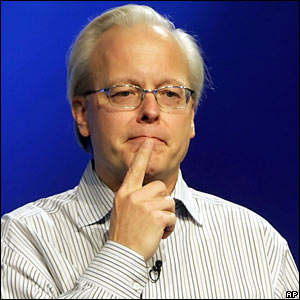
Interesting interview up on GigaOM today, featuring Microsoft‘s Chief Software Architect and industry luminary Ray Ozzie talking about MS’s strategy, the economics of cloud computing and the relevance of desktop and infrastructure challenges.

virtualization-ray-ozzie.jpg

The most interesting bits:

OM: The costs of computing, hardware and bandwidth are dropping quickly. Do you believe that the cost will come down fast enough to make cloud computing actually a profitable business?

RAY OZZIE: Well, it’s unlikely that we would get into it if we didn’t think it was going to be a profitable business. So we’ll just manage it to be profitable. It’s going to have different margins than classic software, or the ad (-supported) business. But, we have every reason to believe that it will be a profitable business. It’s an inevitable business. The higher levels in the app stack require that this infrastructure exists, and the margins are probably going to be higher in the stack than they are down at the bottom.

…

OM: When do you think utility computing can be a profitable business; are we’re looking at like maybe two years, four years out before it actually starts to become a profitable entity?

RAY OZZIE: (Let’s) take (one company) who is in the market today: Amazon. They chose a price point. There are either customers at that price point or not. They may have priced themselves at expected costs as opposed to actual today costs, but it doesn’t really matter. They could have brought it out at twice the existing price and there still would have been a customer base, and they’d be making money at birth.

I think all of these utility-computing services, as they’re born will either be breaking even or profitable. At the scale that we’re talking about, nobody can afford, (even Microsoft) can’t afford to do it at a loss. We could subsidize it, I suppose. Google could subsidize it by profits in other parts of their business, we could subsidize it, but I don’t think there’s any reason that any of us in this world would bring out that infrastructure like this without charging for what we’re paying, and then trying to make some profit over it. The cost base is so high in terms of building these data centers you do want to kind of make it up.

Read the rest of the (edited) interview here.

Filed Under: Interviews, People Tagged With: cloud computing, computing, Google, hardware, microsoft, MS, Ray Ozzie, utility computing, virtualisation, virtualization

  • « Go to Previous Page
  • Go to page 1
  • Go to page 2

Primary Sidebar

Tags

acquisition application virtualization Cisco citrix Citrix Systems citrix xenserver cloud computing Dell desktop virtualization EMC financing Funding Hewlett Packard HP Hyper-V IBM industry moves intel interview kvm linux microsoft Microsoft Hyper-V Novell oracle Parallels red hat research server virtualization sun sun microsystems VDI video virtual desktop Virtual Iron virtualisation virtualization vmware VMware ESX VMWorld VMWorld 2008 VMWorld Europe 2008 Xen xenserver xensource

Recent Comments

  • C program on Red Hat Launches Virtual Storage Appliance For Amazon Web Services
  • Hamzaoui on $500 Million For XenSource, Where Did All The Money Go?
  • vijay kumar on NComputing Debuts X350
  • Samar on VMware / SpringSource Acquires GemStone Systems
  • Meo on Cisco, Citrix Join Forces To Deliver Rich Media-Enabled Virtual Desktops

Copyright © 2025 · Genesis Sample on Genesis Framework · WordPress · Log in

  • Newsletter
  • Advertise
  • Contact
  • About