
• Skip to primary navigation
  • Skip to main content
  • Skip to primary sidebar
Virtualization.com

Virtualization.com

News and insights from the vibrant world of virtualization and cloud computing

  • News
  • Featured
  • Partnerships
  • People
  • Acquisitions
  • Guest Posts
  • Interviews
  • Videos
  • Funding

Search Results for: ovf

“Benchmarking” The Citrix / XenServer Combo with Ian Pratt (Video Interview – Part 3)

June 1, 2008 by Toon Vanagt Leave a Comment

During the Fosdem 2008 conference, we had a chance to sit down (on a bench) with Xen Guru Ian Pratt. Below is the third part (see part 1 and part 2) of our exclusive interview, where Ian shines his XenServer light on the Xen page tables algorithms, open source community involvement, management frameworks, the Citrix take-over, virtualization marketing with OS-enlightment, FUD-tactics by VMWare, …

We cut the interview into 4 digestable pieces, which we publish one at a time (see part 1 and part 2). As said, this is the third part (you can also find a written transcript below for your convenience):

This video is also available on Vimeo and Streamocracy.

(0:02) As you are one of the core members of the Xen project, you know that one of the hardest issues to address are the shadow page tables, which are a head ache when you build a hypervisor. I believe you are in the 6th rewrite of the Xen page tables algorithms. At the same time we see that the hardware vendors try to address this in a different way, by supporting it from the hardware up. What is the best way to go?

“It is one of those areas where having some hardware support certainly helps, but it is not a panacea, certainly with the hardware implementations that exist today. There are plenty of benchmarks (probably most benchmarks) that prove that the software approach of Xen wins out. Because there has been a lot of investment into that software approach and there is some really clever code in there right now, written by some super smart people. It is an interesting arms race between the two. One of the things that we are looking at is depending on the workload -dynamically chosen- whether you use the hardware approach or the purely software approach. You kind of hope that for that particular one –at least for the basic functionality- the hardware wins out over time. But there will always be parts of virtualizing the MMU (Memory Management Unit) which are best done by software. That is where OS-enlightment (aka) Para-virtualization comes in. That is a huge win for virtualizing the MMU.”

(1:30) That is a term I hear more often now. Where does the marketing term: “OS-enlightment” come from?

“We had been using the term para-virtualization. I think it was Microsoft that came up with the term “enlightment”, which we have been told is very much a nod to the Xen-heritage. Microsoft probably has rather more budget to spend on marketing than open source projects.”

We all know Microsoft understands a few things about marketing.

“I am not at all upset with that term. I am quite happy to use it and adopt it.”

(2:09) So Ian, it is quite interesting you just mentioned Citrix and the sun joined us. Do you think the contributions from the open source community have slowed down since the Citrix takeover?

“We certainly have not seen that! If you think about the life of the Xen project, there have been a number of significant changes.
When we left the university to setup XenSource, people were worried we might go off and take Xen in closed source or something, which we did not do. It is still the same group of guys, basically myself, Keir Fraser, Steve Hand, Christian Limpach…all off the same guys working on the project, with now many more off course.

Then Citrix acquired XenSource and we obviously had to explain to people what was happening. I think our community has seen that nothing has changed. One of the things that we did do was just to provide greater transparency. We have setup Xen.org, the Xen advisory board and all of the web site and everything where we run Xen.org. The advisory board now has focus from companies like Intel , AMD, HP, IBM. All big companies that are now contributing to Xen and have that oversight from the advisory board. So I think the community is pretty happy and it’s going from strength to strength.”

(3:33) How do you see the shift XenSource (now XenServer) made from building a para-virtualized platform, that served the open-source community and mainly targeted unix/linux-environments, to a company which has another main audience with Bill, the average Windows admin.

“We were never focused just on running only open source operating systems. That was never the aim. We wanted to build a platform that would be OS-agnostic and to be able to run any OS and do a great job at it. We have always put an awful lot of effort into supporting Windows, because there are a lot of windows OS instances out there, we can’t deny that. It is something that always has been important to us. What is different is the way that XenSource and now Citrix look at packaging Xen. Lots of different companies are bringing Xen to market. Obviously the Linux vendors are mainly concerned about running Linux. Solaris and Sun are mainly concerned about running Solaris. One of the things Citrix / Xenserver are trying to do is making sure it is OS agnostic and we did a great job at running Windows and a great job at running Linux as well.
Xen is awesome running Linux and completely blows any other virtualization solution out of the water and at running Windows it is extremely good too. Let’s put it this way: I am unaware of any benchmarks we lose. “

(05:02) When you look at the fight going on between the companies building the management frameworks for Xen and projects like Enomaly, OpenQrm, Redhat & Novell. Was the acquisition of Xensource by Citrix your easy way out of that fight?

“I think we are still very much in the fight. Xensource and all of these other companies are building management frameworks on top of Xen. I think that all of these companies are coming at it from a different point of view. Linux vendors are trying to provide that same look & feel they have within Linux and expose Virtualization through those same GUIs and tools. The difference is that companies like XenSource and Citrix are interested in making it very easy to use and are building a Virtual Machine hosting appliance, hiding all that complexity and expose it via a web GUI or a Windows user interface.

There are always going to be lots of companies building tools on top of Xen. Even if you look at XenServer, there are all of these other companies building products on top of XenServer, like Egenera, Platform, Marathon. There is a very healthy eco-system of building stuff on top of other people’s stuf. I guess people are happy, because everybody is making money.”

06:27 Some analysts say Microsoft acquired Xensource by proxy, hinting at a future take-over of Citrix by Microsoft. What is your opinion on that topic?

“I truly do not know anything about that. I think if Microsoft was going to buy Citrix, it would have done so a long time ago. I think that Microsoft is a very close Citrix partner and that XenSource has worked with Microsoft as well. There are a number of projects on which we have worked together, such as defining some of the para-virtualization or OS-enlightment extensions to enable Xen-guests to run on Microsoft’s hypervisor when that ships and also vice-versa. We have always found Microsoft quite easy to deal with to be honest.”

(07:16) You get good support from Microsoft?

“Certainly all the people that we deal with are perfectly nice guys.”

(7:23) So let’s talk about the less perfectly nice guys & women. When I read articles on blogs and in the press, I feel that VMware is recently throwing some mud at Citrix and Xensource and especially the marketing department. They try to cast some doubt on your products and projects. What do you think about these marketing techniques?

“Well there has been a certain use of FUD-tactics and things like that. That is sort of a natural reaction. That is what marketing departments will go and do. We have good working relationships with some of the technical folks at VMware and we work together on the OVF virtual appliance format. I know that some of their engineers get pretty embarrassed about some of the stuff their marketing department does. VMware tries to position things which are Xen features or architectural implementations as ‘weaknesses’ against their product. Whereas they know they have teams working flat out to get and implement those same ‘weaknesses’ into their own product. That is just the way it is. Marketing departments go off and do that, but at the end of the day customers will hopefully get the right message and buy the right product.”

(08:45) At least it shows they take you seriously.

“I guess we should be flattered.”
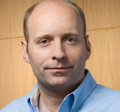
View part 1 or part 2 of this interview.

Filed Under: Featured, Interviews, People, Videos Tagged With: citrix, Citrix Ian Pratt, citrix xenserver, Ian Pratt, interview, Sun xVM, University of Cambridge, video, virtualisation, virtualization, Xen, Xen Ian Pratt, xen.org, XenDesktop, xenserver, xensource, XVM

“Benchmarking” The Citrix / XenServer Combo with Ian Pratt (Video Interview – Part 1)

May 26, 2008 by Robin Wauters 4 Comments

Some time ago, we had a chance to sit down (on a bench) together with Xen Guru Ian Pratt, well known for co-founding and ultimately selling XenSource – the company behind the open-source Xen project – to Citrix in October 2007.

This exclusive interview was taken as part of our video coverage at the Fosdem 2008 conference held at the ULB (Brussels Free University, hence the “inspiring” Solbosch campus background). Toon Vanagt, owner and publisher of Virtualization.com, interviewed the rather jet-lagged Ian Pratt on a sunny Sunday morning about Xen, XenServer and the virtualization landscape as a whole.

We cut the interview into digestable pieces which we will publish one at a time. Here’s the first part, the second part can be found here (you can also find a written transcript below for your convenience):

This video is also available on Vimeo and Streamocracy.

Hello Ian Pratt, you are one of the founders of XenSource, which was recently renamed to XenServer after it was acquired by Citrix. Could you give an introduction to para-virtualization, hypervisors or OS-enlightment as Microsoft likes to market it?

“The work on Xen really started in the University of Cambridge back in 2001 as we were interested in figuring out the best way to build virtualization systems. We realized there were two techniques which -when used together- were going to enable you to do a great job at virtualization.

One is getting facilities into the hardware to make the job of virtualizing the platform easier. This means getting stuff into the CPU, chipset and in particular into the I/O-devices, like the NICs and hostbus adapters. But second also working with the operating system vendors to try to get stuff into the operating system to enable the OS to call down into the hypervisor to work better in a virtualized scenario.

We pushed hard on both of those fronts, working to design network interface adapters that had this special hardware support and also working to add these extensions into operating systems like Linux and then other free operating systems and now even an OS like Microsoft Windows. That is how we get to this current generation of virtualization software that really is able to achieve great performance and have great security to provide all the great benefits of virtualization.”

(1:48) Ian, it is quite remarkable that the Xen project is one of the rare open source software projects that actually managed to get its feature requests into the large hardware vendor production. How did you achieve this?

“Well, there is a long lead time on getting anything build into hardware. As Xen had been running for a quite while as a university project, we were talking to all the different hardware vendors. You have to remember in the early days Xen was sponsored by some of those vendors and also working with the operating system vendors. Also we did things like build network interfaces that had these facilities in.
We prototyped them and wrote papers about them. And then companies really began to see that virtualization was important. Let’s be fair: VMware had a great part to play in showing the world that virtualization was important and then I think Xen has done a great job at showing people how to it should really be done.”

(2:47) It is interesting you mention VMware, because Xen is an open source project and VMware remains a closed source product to date. One of the major challenges for people looking at which vendor to select, is the specific Virtual Machine format and how to avoid vendor lock-in. So what is your opinion on the Open Virtual Format (OVF) and how do you see the evolution in this field.

“OVF actually came about as a collaboration between us and VMWare. We had been working on a format we called the Open Virtual Appliance (OVA) and had been putting quite a bit of work in to that. We were obviously really concerned about the interoperability issues. We had a discussion with VMware as they had been working on their next-generation format for their hypervisor and we actually collaborated together and came up with the OVF specifications. And now both sides are implementing that. We will have to see how it works out in practice. You still have to do a certain amount of preparation on the virtual machine to make it able to work on both platforms and it is really down to the people who produce virtual appliances to follow the best practices and make sure their Virtual Machines are portable. But at least now there is a common file format and metadata format for transferring things between different virtualization solutions. Or at least there will be in the future when it is implemented and ratified by the DTMF and al that boring stuff is out of the way.”

(4:20) So you think that once these meta-data have been defined for Virtual Machines and have adopted by Xen, VMware and Microsoft, we will actually be able to do Vmotion or Virtual Machine Relocation between those different vendors?

“Doing live virtual machine relocation is kind of like changing the engine on a plane in flight!

That is certainly further down the road. OVF is really about having a format in which you can package a given virtual appliance, which might actually consist of the multiple virtual machines and install it onto a given hypervisor and have it run there. And hopefully you also will also be able to use it for moving an installed virtual machine between different hypervisors, but there is a way to go, before we can do this live relocation. It is a worthy end goal, but there is a lot of stuff that would need to happen to make that work.”

(5:16) It is one of those things, when you see it happen for real; which now creates a strong WOW-effect in Virtualization.

“It certainly is and it would be nice to be able to live relocate a virtual machine from Xen to Hyper-V or to VMware, but there is a lot of work to do.”

(5:34) Will VM-mirroring ever be possible?

“Absolutely will not only be possible, it has existed for some time. There is some great work that has been done and a couple of things to point out here. One, there is a commercial product available on top of XenServer, which does this today by a company called Marathon Technologies, where they have 2 virtual machines running on different physical hardware on top of Xen and they are synchronizing the state between the two in real-time to the extent that you can just walk up to one of these machines and yank the power cord straight out from their back. None of the users of these applications or services provided on that server will even notice anything has happened, because it instantaneously (or within milliseconds) failed over to the other VM.

So that was the commercial product. There is also a lot of great work going on in open source. For example a project at the University of Michigan, using a technique called deterministic replay. That is very cool. Also work done by the University of British Colombia on a project called Remus, which I think is really cool, because it works for Virtual Machines that are multi-processor, so you can have an SNMP guest and you could be synchronizing that VM-image to another machine. It is looking like they do not even necessarily need to be in the same building. You might be able to synchronize over a suitably fat pipe across the wide area network. You can use it for disaster recovery. We want to get this cool stuff into mainline Xen.”

(7:16) When looking at VM-relocation, the typical reasons people use this for is either to avoid downtime, disaster recovery and high availability, to relocate workloads or to enforce security policies: either with fire walls inside the VM or to lock the OS at the root-level. Can you tell us something more on those security policies you can enforce in Xen?

“One of the nice things you can do with Virtualization is that you can actually stand outside the OS and look into it. And implement some of these facilities which you would normally do using software installed within the VM. You can now actually do it outside and you do not have to worry whether the administrator has actually configured the fire wall, virus scanner or back-up correctly within the VM. Because we can actually do all of these tasks from outside now. I think that is going to be a far more common thing in the future, where you will try to take care of all of those things within the virtualization layer, so that your administrator of the VM does not have to worry about or risks to mess it up. You can kind of protect administrators from themselves.

You will see virus scanners running as part of the virtualization stack or platform and these will scan the contents of all of the VMs running on it. It is like taking the firewall that you might have on the edge of the network, where it connects to the outside world and kind of pulling that in, to put it closer to the VMs that are actually running applications and actually implementing that firewall in a distributed fashion across all of your virtualized platforms.”

Watch the second part of the interview here.

Filed Under: Featured, Interviews, People, Videos Tagged With: citrix, Citrix Ian Pratt, citrix xenserver, Ian Pratt, interview, Sun xVM, University of Cambridge, video, virtualisation, virtualization, Xen, Xen Ian Pratt, xen.org, XenDesktop, xenserver, xensource, XVM

KVM Forum 2008 Schedule Has Been Announced

April 28, 2008 by Kris Buytaert 1 Comment

The schedule for the upcoming KVM 2008 forum in Nappa, CA is up.

Qumranet, as the main KVM sponsor, is inviting all KVM developers to their second KVM summit on June 10 to 13th at the Marriot Napa Valley, California.

Many of the world’s top kernel developers will gather to discuss the state of the union on KVM and virtualization technology in general. More specifically, the group will plan the technology roadmap and future of KVM.

Avi Kivity will be keynoting, and off course Qumranet will also talk about KVM in Solid ICE. Apart from that, there will be a variety of presentations from Red Hat, IBM, Transitive and Intel representatives.

Gerd Hoffmann of Red Hat (SUSE in a previous role) will be talking about mixing Xen and KVM with xenner, which is a utility able to run Xen paravirtualized kernels as guests on Linux hosts, without the Xen hypervisor and using kvm instead.

Different IBM people will be discussing the state of KVM on Big Iron and PowerPC. And there will also be some talk about Open-ovf , an open source software project around the Open Virtual Appliance Format.

Stay tuned for more!

(Full disclosure: Virtualization.com is a media partner of the KVM Forum 2008)

Filed Under: Guest Posts Tagged With: IBM, intel, kvm, KVM Forum, KVM Forum 2008, KVM in Solid ICE, open-ovf, qumranet, red hat, solid ice, SolidICE, SUSE, Transitive, virtualisation, virtualization, Xen, xenner

Video: Interview with Matt Rechenburg, Project Manager at OpenQRM on Virtualization

February 24, 2008 by Toon Vanagt 1 Comment

This interview is part of our Virtualization Video Series, a recurring theme we want to implement on Virtualization.com featuring interviews with key players from the industry, event reports, etc. Our first interview was recorded at the Profoss 2008 event on Virtualisation and features Matt Rechenburg, Project Manager at openQRM, interviewed by Toon Vanagt about what he’s doing and how he looks at the future of virtualization.

You can find a written transcript of the interview below.

WRITTEN TRANSCRIPT

Welcome Matthias Rechenburg.
You are the Project Manager at OpenQRM. Could you tell us something more about the datacenter management platform you are building?

With OpenQRM, we are trying to give the system administrators a complete solution for managing their datacenter. What we often found out is that there are critical, loosely connected tools being used to manage modern data centers today. Some of these tools can not be missed by the sysadmins. With OpenQRM, we offer the option to integrate these utilities as an additional plug-in. We are a well-defined plug-in API. So the system admin benefits from his once loosely connected tools in a single management console. The benefit is that integrated tools cooperate with each other and OpenQRM and its deployment and provisioning framework. This way OpenQRM can handle and act on specific situations automatically. A good example is Nagios, we have an integrated monitor plug-in, which feeds errors into OpenQRM as events and OpenQRM then reacts automatically by for example restarting or redeploying a machine.

So Matt, what problem is openQRM trying to solve?

OpenQRM tries to make it very easy for its users to make their first steps into Virtualization. For example OPenQRM provides tools to migrate Physical Machines into Virtual Machines (aka P2V) from any type. With its partitioning layer it conforms Virtualization Tehcnology, so that a sys admin may decide at any time to move a Physical machine to Xen VM, or from a XEN VM to a Linux Vserver partition, and form a LinuxVserver partition to Quemo And later even back to the Physical machine if needed, without needing to change anything on the server itself or hassling with the configuration

When you look at your competition, what are the Virtualization features on your wishlist?

We are not a single virtualization technology. we are a platform which tries to conform Virtualization technology. What we learned today at this Profoss event, is that there is no single hypervisor technology which is the best or single option for a users. For each service or application, there is always a virtualization solution that fits best for that particular situation. So the user should always select the virtualization technology upon the needs of the services and applications, which they want to virtualize. With OpenQRM, we try to close the gap of the current problem of migrating from one technology to another or for the first step of moving from physical to virtual systems.

What do you think about the standardization discussions by vendors on open formats such as OVF?

What I currently understand from the virtualization vendors, is that there is great motivation and cooperation to build a standard. On the other hand they also want to keep their own customers. The option to move from one virtualization format to another, may not be beneficial for every company.

Matt, what evolution do you see in the virtualization mindset and capabilities of the datacenter engineers and decision makers you work with?

I see a strong movement to “appliance-based deployment”. This means automatic provisioning plus configuration anagement of server-images to either physical- or virtual-machines. Since there are different virtualization technologies available datacenter engineers have to manage migration from physical-to-virtual (p2v), virtual-to-physical (v2p) and also migration from one virtualization type to another depending on the application needs. The goal is it to create an vendor independent data-center management platform which supports all mainstream virtualization technologies and provides lots of automatism.

Do you think we need to educate the business user about the array of possibility virtualization could offer them?

Of course, getting detailed informations and facts from independent professionals helps decision makers to create their own, objective knowledge of how to go on with virtualization.

What about licensing issues? What did you foresee in the Open QRM platform to correlate between the software and the virtual environments they run in?

Since the licensing issues of running operation-systems in virtual machines are not yet fully solved by the operation-system vendors. Therefore openQRM for now “just” provides the technical environment for rapid, appliance-based deployment. Of course we are looking forward to implement licensing-verification add-ons as additional plugin for openQRM as soon as those issues are solved.

Everybody is still struggling in this field?

Yep, we are still waiting for a kind of standard for virtual-machine licensing.

What do you expect the commercial vendors to do?

Asap, they should come up with a transparent and fair licensing model for operation systems running in virtual-machines. This would also help companies to move on in virtualization.

What do you consider a fair model and measurement unit for the users?

Eh, Power-consumption?

You think electricity consumption could be such an underlying unit and a way to educate the users?

Yes.

Storage seems to become quite a virtualization bottleneck? What systems should users be able to support?

Yes, bringing up a new virtual machines basically just requires some space on a storage-server. To my mind we should directly interface modern storage-server solutions with a generic deployment system which is being able to manage both, physical and virtual systems.

Matt, thanks a lot for your time and all the best with OpenQRM!

Filed Under: Interviews, People, Videos Tagged With: interview, linux, matt rechenburg, matthias rechenburg, nagios, open QRM, openvz, profoss, profoss 2008, video, video interview, Videos, virtualisation, virtualization, virtualization video series, vmware, Xen

  • « Go to Previous Page
  • Go to page 1
  • Interim pages omitted …
  • Go to page 5
  • Go to page 6
  • Go to page 7

Primary Sidebar

Tags

acquisition application virtualization Cisco citrix Citrix Systems citrix xenserver cloud computing Dell desktop virtualization EMC financing Funding Hewlett Packard HP Hyper-V IBM industry moves intel interview kvm linux microsoft Microsoft Hyper-V Novell oracle Parallels red hat research server virtualization sun sun microsystems VDI video virtual desktop Virtual Iron virtualisation virtualization vmware VMware ESX VMWorld VMWorld 2008 VMWorld Europe 2008 Xen xenserver xensource

Recent Comments

  • C program on Red Hat Launches Virtual Storage Appliance For Amazon Web Services
  • Hamzaoui on $500 Million For XenSource, Where Did All The Money Go?
  • vijay kumar on NComputing Debuts X350
  • Samar on VMware / SpringSource Acquires GemStone Systems
  • Meo on Cisco, Citrix Join Forces To Deliver Rich Media-Enabled Virtual Desktops

Copyright © 2025 · Genesis Sample on Genesis Framework · WordPress · Log in

  • Newsletter
  • Advertise
  • Contact
  • About