
• Skip to primary navigation
  • Skip to main content
  • Skip to primary sidebar
Virtualization.com

Virtualization.com

News and insights from the vibrant world of virtualization and cloud computing

  • News
  • Featured
  • Partnerships
  • People
  • Acquisitions
  • Guest Posts
  • Interviews
  • Videos
  • Funding

Featured

VMware Launches vFabric 5, An Integrated Application Platform For Virtual And Cloud Environments

June 15, 2011 by Robin Wauters Leave a Comment

VMware yesterday announced vFabric 5, an integrated application platform for virtual and cloud environments.

Combining the Spring development framework for Java and the latest generation of vFabric application services, vFabric 5 will provide the core application platform for building, deploying and running modern applications.

vFabric 5 introduces a flexible packaging and licensing model that will allow enterprises to purchase application infrastructure software based on virtual machines, rather than physical hardware CPUs, and to pay only for the licenses in use.

The model in vFabric 5 more closely aligns to cloud computing models that directly link the cost of software with use, consumption and value delivered to the organization.

vFabric 5 is engineered specifically to take advantage of the server architecture of VMware vSphere. The new Elastic Memory for Java (EM4J) capability that will be available in vFabric tc Server will allow for optimal management of memory across Java applications through the use of memory ballooning in the JVM.

Over 3 million developers use the Spring framework to build enterprise Java applications. With vFabric 5, users can gain insight into the performance of their Spring applications with the new Spring Insight Operations.

VMware vFabric 5 will be generally available in late summer 2011.

It will be offered in two versions: VMware vFabric Standard at $1,200 per VM and VMware vFabric Advanced at $1,800 per VM.
Filed Under: Featured, Uncategorized Tagged With: vfabric, vFabric 5, vmware, VMware vFabric, Vmware vFabric 5

New Challenges Emerge As Virtualization Goes Mainstream, Symantec Finds

June 15, 2011 by Robin Wauters Leave a Comment

Symantec recently announced the findings of its 2011 Virtualization and Evolution to the Cloud Survey which examined how organizations plan to move business-critical initiatives to virtual and hybrid cloud computing environments.

The survey highlighted topics including server, client, and storage virtualization, storage-as-a-service, and hybrid/private cloud technologies; and the results uncover disparities between expectations and reality as enterprises deploy these solutions. The survey is based on more than 3,700 respondents from 35 countries worldwide.

Adoption of server virtualization is widespread, and more than 75 percent of organizations are discussing private and hybrid cloud deployments. Of the technologies evaluated in the survey, server and storage virtualization are the most mature with 45 and 43 percent of enterprises implementing. Private Storage-as-a-Service is the least mature with 36 percent adopting.

Early investments have revealed gaps between expectations and reality which indicate that organizations are still learning what these technologies are capable of and how to overcome the new challenges they bring with them.

Server virtualization projects were most successful, with only a 4 percent average gap between expected and realized goals. The biggest gaps occurred in scalability, reducing capital expenditures and reducing operating expenditures.

The average shortfall in storage virtualization was 33 percent, with disappointments coming in agility, scalability and reducing operating expenditures.

Respondents reported an average gap between expected and realized goals of 26 percent with endpoint/desktop virtualization. They cited disappointments in new endpoint deployment, application delivery and application compatibility.

Seventy-seven percent of organizations are considering private Storage-as-a-Service, but these projects are challenging to implement and fall short of expectations by 37 percent. For example, complexity reduction was a goal for 84 percent of respondents, but reached by only 44 percent.

The survey shows that organizations are leveraging virtualization for business-critical applications. Of enterprises who are implementing virtualization, more than half (59 percent) plan to virtualize database applications in the next 12 months.

Fifty-five percent plan to virtualize web applications, and 47 percent plan to virtualize email and calendar applications. Forty-one percent plan to virtualize ERP applications.

More than half of respondents (56 percent) said storage costs somewhat or significantly increased with server virtualization. Of those in the process of virtualizing storage, the top three reasons for deployment include reducing operating expenses (55 percent), improving storage performance (54 percent), and improving disaster recovery readiness (53 percent).

Seventy-six percent of enterprises who have implemented server virtualization indicated that security was a somewhat/extremely large factor in keeping various constituents from being more confident about placing business-critical applications on virtualized servers. Sixty-three percent listed security as a significant/extreme challenge to implementing server virtualization.

Filed Under: Featured, Uncategorized Tagged With: Symantec

SAP, Microsoft Team Up To Make App Development And Cloud Management Easier

May 18, 2011 by Robin Wauters Leave a Comment

Expanding their long-term partnership with a joint base of thousands of customers, SAP and Microsoft today announced their plans to improve integration between SAP software and Microsoft virtualization and cloud computing technologies.

These plans include innovations to people-centric applications development for SAP software as well as virtualization and cloud computing without disruption of customer IT landscapes.

The announcement was made at SAPPHIRE NOW, being held in Orlando, Florida, May 15-18, 2011.

The parties plan to make business processes from SAP software more easily consumed and extended by .NET developers, simplifying the overall application development process. This level of access will help redefine the SAP/Microsoft developer landscape with shorter development cycles, lower costs and openness into core applications.

Microsoft and SAP are also planning to provide integration between upcoming landscape management software from SAP, Microsoft System Center and Microsoft Windows Server Hyper-V technology, bringing greater agility for cloud management and deployments.

Filed Under: Featured, Partnerships Tagged With: Hyper-V, microsoft, Microsoft Hyper-V, Microsoft System Center, Microsoft Windows Server Hyper-V, SAP

HP, IBM, Intel, Red Hat And Others Form Open Virtualization Alliance

May 18, 2011 by Robin Wauters Leave a Comment

BMC Software, Eucalyptus Systems, HP, IBM, Intel, Red Hat and SUSE yesterday announced the formation of the Open Virtualization Alliance, a consortium committed to fostering the adoption of open virtualization technologies including Kernel-based Virtual Machine (KVM).

The consortium will promote examples of customer successes, encourage interoperability and accelerate the expansion of the ecosystem of third party solutions around KVM, providing businesses improved choice, performance and price for virtualization.

The Open Virtualization Alliance will also provide education, best practices and technical advice to help businesses understand and evaluate their virtualization options.

The consortium complements the existing open source communities managing the development of the KVM hypervisor and associated management capabilities, which are driving technology innovations for customers virtualizing both Linux and Windows applications.

Members of the Open Virtualization Alliance have a common interest in supporting open virtualization, and are involved in the development, distribution, support, use, or other business interest in KVM or offerings which use it. By providing an open virtualization alternative, they are offering their clients choice and enabling them to select the ideal virtualization products for their business needs.

Filed Under: Featured Tagged With: BMC Software, eucalyptus systems, HP, IBM, intel, Kernel-based Virtual Machine, Kernel-based Virtual Machines, kvm, open virtualization, Open Virtualization Alliance, OVA, red hat, SUSE

Study: 30 Percent Of IT Will Be Cloud-Based By 2015

May 18, 2011 by Robin Wauters 1 Comment

The US cloud computing market is poised for strong growth, as an increasing percentage of enterprise information technology is now becoming cloud-based. According to new research from WaveLength Market Analytics and Winn Technology Group, 58% of medium and large enterprises are already using or planning to use the cloud.

About 41% of that market is comprised of ‘Cloud Pioneers’, those enterprises that actively use or pilot some type of cloud solution. Another 17%, dubbed ‘Cloud Planners’, are planning to implement a cloud solution.

Next to Software-as-a-Service, the most common solutions deployed by companies are Platform-as-a-Service, with 54.8%, hosted private Cloud with 32%, and Infrastructure-as-a-Service with nearly 26%. In the next two years, enterprise IT buyers expect to use more private, public, and hybrid clouds.

To download the study, click here.

Filed Under: Featured Tagged With: WaveLength, WaveLength Market Analytics, Winn Technology Group

VMware Unveils Horizon App Manager: Easy Cloud Application Management For $30 Per User / Year

May 17, 2011 by Robin Wauters Leave a Comment

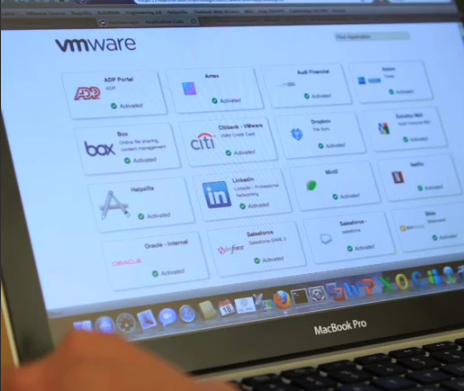
VMware this morning announced VMware Horizon App Manager, a user-centric management service for accessing cloud applications.

VMware Horizon App Manager represents the first component of the company’s “Project Horizon” vision first previewed at VMworld 2010.

A datasheet (PDF) is available here.

The company says future releases of VMware Horizon will broker user access to a variety of application types, virtual Windows desktops and data resources, while delivering the security and control required by businesses. The result should be a simple, seamless user experience when accessing work resources across the private and public cloud on whatever device the user chooses.

At its core, VMware Horizon App Manager includes an identity as a service hub that extends a user’s existing identity in systems such as Microsoft Active Directory or other directory options, into third-party public cloud applications like Box.net, BroadVision, Google, Salesforce.com, WebEx, Workday and others.

This simplifies the management of multiple access credentials, a necessity brought about by the growing number of cloud applications now found in a typical enterprise.

In addition, the VMware Horizon App Manager provides an open, user-centric platform for accessing cloud applications within a single application portal that is accessible from a wide range of end-user devices.

Additional VMware Horizon App Manager features include:

– Multi-Platform/Multi-Device Support
– Enterprise Directory Federation/Cloud Identity Hub
– Standards Based Secure Authentication
– Application Provisioning
– Roles-Based Access and Reporting

Available today to select early access customers in North America and Asia Pacific Region, and via trials in other regions, VMware Horizon App Manager is $30.00 per user/per year.

Check out Robert Scoble’s interview with VMware lead for Project Horizon Noah Wasmer.

Update: Chris Hoff’s take: VMware’s Horizon App Manager – A Big Bet That Will Pay Off…


Filed Under: Featured, News Tagged With: Featured, Horizon App Manager, Project Horizon, vmware, VMware Horizon App Manager, VMware Project Horizon

  • « Go to Previous Page
  • Go to page 1
  • Interim pages omitted …
  • Go to page 3
  • Go to page 4
  • Go to page 5
  • Go to page 6
  • Go to page 7
  • Interim pages omitted …
  • Go to page 56
  • Go to Next Page »

Primary Sidebar

Tags

acquisition application virtualization Cisco citrix Citrix Systems citrix xenserver cloud computing Dell desktop virtualization EMC financing Funding Hewlett Packard HP Hyper-V IBM industry moves intel interview kvm linux microsoft Microsoft Hyper-V Novell oracle Parallels red hat research server virtualization sun sun microsystems VDI video virtual desktop Virtual Iron virtualisation virtualization vmware VMware ESX VMWorld VMWorld 2008 VMWorld Europe 2008 Xen xenserver xensource

Recent Comments

  • C program on Red Hat Launches Virtual Storage Appliance For Amazon Web Services
  • Hamzaoui on $500 Million For XenSource, Where Did All The Money Go?
  • vijay kumar on NComputing Debuts X350
  • Samar on VMware / SpringSource Acquires GemStone Systems
  • Meo on Cisco, Citrix Join Forces To Deliver Rich Media-Enabled Virtual Desktops

Copyright © 2025 · Genesis Sample on Genesis Framework · WordPress · Log in

  • Newsletter
  • Advertise
  • Contact
  • About