• Skip to primary navigation
  • Skip to main content
  • Skip to primary sidebar
Virtualization.com

Virtualization.com

News and insights from the vibrant world of virtualization and cloud computing

  • News
  • Featured
  • Partnerships
  • People
  • Acquisitions
  • Guest Posts
  • Interviews
  • Videos
  • Funding

citrix

Microsoft Officially Launches Server Virtualization Validation Program

June 11, 2008 by Robin Wauters 3 Comments

Microsoft‘s Server Virtualization Validation Program, which was first announced in November 2007, has become operational yesterday, with the patricipation of Citrix, Sun, Novell and Virtual Iron.

The Server Virtualization Validation Program (SVVP) is open to any vendor who delivers a virtualization machine solution that hosts Windows Server 2008, Windows 2000 Server Service Pack 4 and Windows Server 2003 Service Pack 2 and subsequent service packs. The virtualization solution can either be hypervisor-based or a hosted solution.

The costs associated with joining the program include membership in TSAnet at Mission Critical level, so that the vendor and Microsoft can share support information, incremental costs, if any, to perform the validation tests, and a nominal expense (currently $250) to qualify each ‘configuration’ that is submitted for validation.


Filed Under: News, Partnerships Tagged With: citrix, Citrix Systems, microsoft, Microsoft Server Virtualization Validation Program, Novell, server virtualization, Server Virtualization Validation Program, sun, sun microsystems, Virtual Iron, virtualisation, virtualization

Symantec Teams Up With Citrix, Enhances Veritas Virtual Infrastructure Suite

June 11, 2008 by Robin Wauters Leave a Comment

Symantec has announced Veritas Virtual Infrastructure, which it claims to be the first solution to offer advanced storage capabilities for virtual server environments that effectively manage storage in large scale, x86 production environments.

Symantec logo

Veritas Virtual Infrastructure combines storage management capabilities from Veritas Storage Foundation with Citrix XenServer technology. Veritas Virtual Infrastructure aims to preserve all of the key storage management benefits enterprise customers rely on in their physical environments, but are not available in current file-system based virtualization approaches.

Veritas Virtual Infrastructure uses a new distributed volume manager specifically designed to deliver advanced storage management capabilities for virtual servers. It uses a client/server architecture that establishes a unique, individual relationship between each virtual server and its underlying storage, just as if it were a physical server. Since it leverages Storage Foundation, Symantec claims its users can realize all of these benefits from their existing, heterogeneous SAN storage.

Veritas Virtual Infrastructure is expected to be available in the fall of 2008 with proposed pricing starting at $4,595 per 2 socket server.

Filed Under: Featured, News Tagged With: citrix, citrix xenserver, server virtualization, storage, Symantec, Symantec Citrix, Symantec Veritas, Veritas, Veritas Storage Foundation, Veritas Virtual Infrastructure, virtualisation, virtualization

Stratus Technologies Releases Avance, Integrates With Citrix XenServer for Software-Based High-Availability Solution

June 11, 2008 by Robin Wauters 1 Comment

Stratus Technologies has announced (PDF) its Stratus Avance software, the company’s first software-based high availability (HA) product. Using embedded virtualization and running on ordinary x86 servers, Avance claims to provide levels of availability superior to, and without the complexity of, high-availability cluster solutions for Linux and Windows applications.

Stratus Technologies

Stratus’ new software-based solution targets the SMB market as well as “edge” applications in large distributed networks where IT-staff support is minimal or non-existent. Prospective customers include medical practices, retail chains, small companies, branch banks, remote office or departmental computing, or distributed warehouses, distribution hubs or manufacturing facilities, for example.

Unlike other high-availability solutions, Avance HA positions itself as instant and automatic. Processing takes place on one server and data is simultaneously written to the mate, which can seamlessly assume
processing duties at any time should the primary server go out of service. If that happens, the affected server is removed from the network, alerts go out to user-defined recipients, a repair is made, and the server is brought back online to resynchronize with the active node with no downtime or data loss.

Avance is integrated with Citrix XenServer, and the U.S. list price for Avance software is $2,500 per server (including the license for Citrix XenServer). Avance software is available from Stratus channel partners and distributors, and in volume purchases directly from Stratus.

Filed Under: News, Partnerships Tagged With: Avance, Avance Software, citrix, citrix xenserver, HA, high availability, Stratus, Stratus Avance Software, Stratus Citrix, Stratus Technologies, virtualisation, virtualization, xenserver

Citrix Integrates Access Gateway 1.8 With XenDesktop

June 10, 2008 by Robin Wauters Leave a Comment

Citrix has integrated its Access Gateway appliance, version 1.8 with its recently released XenDesktop virtual desktop solution. Citrix’ security solution will allow companies to deliver virtual desktops to users based on identity, location and security status.

Citrix said its SmartAccess technology, when applied to its VDI solution, will allow customers to deploy virtual desktops more quickly and more securely to users worldwide. Additionally, the gateway’s wizards have been extended to support XenDesktop. The configuration wizards now enable IS managers to automate common XenDesktop configuration tasks.

The 8.1 release of Citrix Access Gateway costs about $3500 and includes end user licenses for XenDesktop use.

[Source: ZDnet Blogs]

Filed Under: News Tagged With: Access Gateway, Access Gateway 1.8, citrix, Citrix Access Gateway, Citrix Access Gateway 1.8, Citrix XenDesktop, desktop virtualization, SmartAccess, virtual desktop, virtualisation, virtualization, XenDesktop

“Benchmarking” The Citrix / XenServer Combo with Ian Pratt (Video Interview – Part 3)

June 1, 2008 by Toon Vanagt Leave a Comment

During the Fosdem 2008 conference, we had a chance to sit down (on a bench) with Xen Guru Ian Pratt. Below is the third part (see part 1 and part 2) of our exclusive interview, where Ian shines his XenServer light on the Xen page tables algorithms, open source community involvement, management frameworks, the Citrix take-over, virtualization marketing with OS-enlightment, FUD-tactics by VMWare, …

We cut the interview into 4 digestable pieces, which we publish one at a time (see part 1 and part 2). As said, this is the third part (you can also find a written transcript below for your convenience):

This video is also available on Vimeo and Streamocracy.

(0:02) As you are one of the core members of the Xen project, you know that one of the hardest issues to address are the shadow page tables, which are a head ache when you build a hypervisor. I believe you are in the 6th rewrite of the Xen page tables algorithms. At the same time we see that the hardware vendors try to address this in a different way, by supporting it from the hardware up. What is the best way to go?

“It is one of those areas where having some hardware support certainly helps, but it is not a panacea, certainly with the hardware implementations that exist today. There are plenty of benchmarks (probably most benchmarks) that prove that the software approach of Xen wins out. Because there has been a lot of investment into that software approach and there is some really clever code in there right now, written by some super smart people. It is an interesting arms race between the two. One of the things that we are looking at is depending on the workload -dynamically chosen- whether you use the hardware approach or the purely software approach. You kind of hope that for that particular one –at least for the basic functionality- the hardware wins out over time. But there will always be parts of virtualizing the MMU (Memory Management Unit) which are best done by software. That is where OS-enlightment (aka) Para-virtualization comes in. That is a huge win for virtualizing the MMU.”

(1:30) That is a term I hear more often now. Where does the marketing term: “OS-enlightment” come from?

“We had been using the term para-virtualization. I think it was Microsoft that came up with the term “enlightment”, which we have been told is very much a nod to the Xen-heritage. Microsoft probably has rather more budget to spend on marketing than open source projects.”

We all know Microsoft understands a few things about marketing.

“I am not at all upset with that term. I am quite happy to use it and adopt it.”

(2:09) So Ian, it is quite interesting you just mentioned Citrix and the sun joined us. Do you think the contributions from the open source community have slowed down since the Citrix takeover?

“We certainly have not seen that! If you think about the life of the Xen project, there have been a number of significant changes.
When we left the university to setup XenSource, people were worried we might go off and take Xen in closed source or something, which we did not do. It is still the same group of guys, basically myself, Keir Fraser, Steve Hand, Christian Limpach…all off the same guys working on the project, with now many more off course.

Then Citrix acquired XenSource and we obviously had to explain to people what was happening. I think our community has seen that nothing has changed. One of the things that we did do was just to provide greater transparency. We have setup Xen.org, the Xen advisory board and all of the web site and everything where we run Xen.org. The advisory board now has focus from companies like Intel , AMD, HP, IBM. All big companies that are now contributing to Xen and have that oversight from the advisory board. So I think the community is pretty happy and it’s going from strength to strength.”

(3:33) How do you see the shift XenSource (now XenServer) made from building a para-virtualized platform, that served the open-source community and mainly targeted unix/linux-environments, to a company which has another main audience with Bill, the average Windows admin.

“We were never focused just on running only open source operating systems. That was never the aim. We wanted to build a platform that would be OS-agnostic and to be able to run any OS and do a great job at it. We have always put an awful lot of effort into supporting Windows, because there are a lot of windows OS instances out there, we can’t deny that. It is something that always has been important to us. What is different is the way that XenSource and now Citrix look at packaging Xen. Lots of different companies are bringing Xen to market. Obviously the Linux vendors are mainly concerned about running Linux. Solaris and Sun are mainly concerned about running Solaris. One of the things Citrix / Xenserver are trying to do is making sure it is OS agnostic and we did a great job at running Windows and a great job at running Linux as well.
Xen is awesome running Linux and completely blows any other virtualization solution out of the water and at running Windows it is extremely good too. Let’s put it this way: I am unaware of any benchmarks we lose. “

(05:02) When you look at the fight going on between the companies building the management frameworks for Xen and projects like Enomaly, OpenQrm, Redhat & Novell. Was the acquisition of Xensource by Citrix your easy way out of that fight?

“I think we are still very much in the fight. Xensource and all of these other companies are building management frameworks on top of Xen. I think that all of these companies are coming at it from a different point of view. Linux vendors are trying to provide that same look & feel they have within Linux and expose Virtualization through those same GUIs and tools. The difference is that companies like XenSource and Citrix are interested in making it very easy to use and are building a Virtual Machine hosting appliance, hiding all that complexity and expose it via a web GUI or a Windows user interface.

There are always going to be lots of companies building tools on top of Xen. Even if you look at XenServer, there are all of these other companies building products on top of XenServer, like Egenera, Platform, Marathon. There is a very healthy eco-system of building stuff on top of other people’s stuf. I guess people are happy, because everybody is making money.”

06:27 Some analysts say Microsoft acquired Xensource by proxy, hinting at a future take-over of Citrix by Microsoft. What is your opinion on that topic?

“I truly do not know anything about that. I think if Microsoft was going to buy Citrix, it would have done so a long time ago. I think that Microsoft is a very close Citrix partner and that XenSource has worked with Microsoft as well. There are a number of projects on which we have worked together, such as defining some of the para-virtualization or OS-enlightment extensions to enable Xen-guests to run on Microsoft’s hypervisor when that ships and also vice-versa. We have always found Microsoft quite easy to deal with to be honest.”

(07:16) You get good support from Microsoft?

“Certainly all the people that we deal with are perfectly nice guys.”

(7:23) So let’s talk about the less perfectly nice guys & women. When I read articles on blogs and in the press, I feel that VMware is recently throwing some mud at Citrix and Xensource and especially the marketing department. They try to cast some doubt on your products and projects. What do you think about these marketing techniques?

“Well there has been a certain use of FUD-tactics and things like that. That is sort of a natural reaction. That is what marketing departments will go and do. We have good working relationships with some of the technical folks at VMware and we work together on the OVF virtual appliance format. I know that some of their engineers get pretty embarrassed about some of the stuff their marketing department does. VMware tries to position things which are Xen features or architectural implementations as ‘weaknesses’ against their product. Whereas they know they have teams working flat out to get and implement those same ‘weaknesses’ into their own product. That is just the way it is. Marketing departments go off and do that, but at the end of the day customers will hopefully get the right message and buy the right product.”

(08:45) At least it shows they take you seriously.

“I guess we should be flattered.”

View part 1 or part 2 of this interview.

Filed Under: Featured, Interviews, People, Videos Tagged With: citrix, Citrix Ian Pratt, citrix xenserver, Ian Pratt, interview, Sun xVM, University of Cambridge, video, virtualisation, virtualization, Xen, Xen Ian Pratt, xen.org, XenDesktop, xenserver, xensource, XVM

Citrix Workflow Studio 1.0 Beta Release

June 1, 2008 by Robin Wauters Leave a Comment

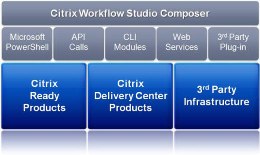
Citrix released a new beta program of Workflow Studio 1.0, a new product able to provide an automation framework for XenServer, XenDesktop, XenApp (formerly Presentation Server) and NetScaler. More information about the ‘Community Tech Preview’ here.

[Source: Citrix blogs]

Filed Under: News Tagged With: citrix, Citrix Workflow Studio, Citrix Workflow Studio 1.0, Citrix Workflow Studio 1.0 beta, virtualisation, virtualization, Workflow Studio, Workflow Studio 1.0, Workflow Studio 1.0 beta

  • « Go to Previous Page
  • Go to page 1
  • Interim pages omitted …
  • Go to page 12
  • Go to page 13
  • Go to page 14
  • Go to page 15
  • Go to page 16
  • Interim pages omitted …
  • Go to page 20
  • Go to Next Page »

Primary Sidebar

Tags

acquisition application virtualization Cisco citrix Citrix Systems citrix xenserver cloud computing Dell desktop virtualization EMC financing Funding Hewlett Packard HP Hyper-V IBM industry moves intel interview kvm linux microsoft Microsoft Hyper-V Novell oracle Parallels red hat research server virtualization sun sun microsystems VDI video virtual desktop Virtual Iron virtualisation virtualization vmware VMware ESX VMWorld VMWorld 2008 VMWorld Europe 2008 Xen xenserver xensource

Recent Comments

  • C program on Red Hat Launches Virtual Storage Appliance For Amazon Web Services
  • Hamzaoui on $500 Million For XenSource, Where Did All The Money Go?
  • vijay kumar on NComputing Debuts X350
  • Samar on VMware / SpringSource Acquires GemStone Systems
  • Meo on Cisco, Citrix Join Forces To Deliver Rich Media-Enabled Virtual Desktops

Copyright © 2025 · Genesis Sample on Genesis Framework · WordPress · Log in

  • Newsletter
  • Advertise
  • Contact
  • About