• Skip to primary navigation
  • Skip to main content
  • Skip to primary sidebar
Virtualization.com

Virtualization.com

News and insights from the vibrant world of virtualization and cloud computing

  • News
  • Featured
  • Partnerships
  • People
  • Acquisitions
  • Guest Posts
  • Interviews
  • Videos
  • Funding

microsoft

Neterion 10 Gigabit Ethernet Adapter Drivers Embedded In Windows Server 2008

April 28, 2008 by Robin Wauters 1 Comment

Neterion, maker of 10 Gigabit Ethernet (10 GbE) adapters for server and storage environments, announced today that drivers for its 10 GbE adapters are embedded in the initial release of Windows Server 2008.

Neterion

Neterion is one of only two 10 GbE adapter vendors to be included in this release (the other being Intel). In addition, Neterion’s adapters are supported in the beta release of Microsoft Hyper-V, the hypervisor software for server virtualization that will be available with various versions of Windows Server 2008.

From the press release:

“Built with enhanced Web and virtualization capabilities, Windows Server 2008 is designed to increase the reliability and flexibility of server infrastructures while helping to save time and reduce costs by consolidating applications with virtualization licensing rights. Neterion 10 GbE adapters include advanced silicon based I/O Virtualization (IOV) capabilities that eliminate I/O bottlenecks within virtualized servers.”

“Neterion’s 10 GbE native driver support for Windows Server 2008 will add new levels of performance and flexibility for an enterprise-class server platform,” said Sandeep Singhal, director of program management at Microsoft. “Furthermore, Neterion’s native IOV support for Hyper-V will enable IT managers to achieve optimal performance and manageability of their hardware resources.”

The Neterion 10 GbE Xframe drivers and adapters are certified to provide native support for several Server 2008 configurations including Windows Server 2008 Standard, Windows Server 2008 Enterprise and Windows Server 2008 Datacenter. Each configuration offers a platform for deploying business-critical application and large scale virtualization on small and large servers.

Windows Server 2008 was announced on February 27th and Hyper-V is currently in beta testing and will be officially launched later this year.

[Source: Marketwire]
Filed Under: News Tagged With: 10 GbE, Hyper-V, microsoft, Microsoft Hyper-V, Neterion, Neterion 10 gbE, Neterion 10 GbE Xframe, Neterion 10 Gigabit Ethernet, virtualisation, virtualization, Windows Server 2008, Xframe

Microsoft Puts Forth System Management As Key Differentiator In Virtualization Technology

April 22, 2008 by Robin Wauters Leave a Comment

Microsoft is targeting system management as a way to differentiate itself from competitors in the virtualization market, the company reportedly stated today, as reported by PC World.

Microsoft

Anticipating that the market for virtualization software, such as Microsoft’s Hyper-V, eventually will be commoditized, the company sees management as the key revenue opportunity for competitors offering server virtualization, said Windows Enterprise and Management Division General Manager Larry Orecklin, speaking to reporters on Microsoft’s campus Tuesday.

Microsoft is apparently so keen on making management the corner stone of its virtualization strategy that it plans to open up management for other virtualization platforms, such as VMware and XenSource, with its System center Virtual Machine Manager tool, which it released last September.

Also interesting to note:

Microsoft plans to outline its virtualization strategy further at its Microsoft Management Summit next week, said Orecklin, who suggested Tuesday that a beta of Virtual Machine Manager with support for Hyper-V and VMware ESX also will be available at that time.

[Source: PC World]

Filed Under: Featured, Interviews Tagged With: Hyper-V, HyperV, Larry Orecklin, microsoft, Microsoft Hyper-V, System center Virtual Machine Manager, Virtual Machine Manager, virtualisation, virtualization

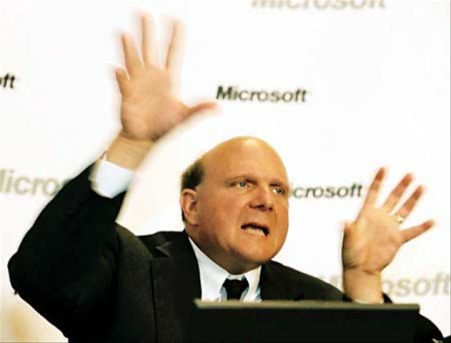
What Should We Ask Steve Ballmer?

April 21, 2008 by Robin Wauters 1 Comment

Upcoming thursday, we’re sitting down with Microsoft CEO Steve Ballmer for a short Q&A session. We have some questions in mind for the man, but we thought it might be a good opportunity to ask you for feedback on what we should ask as well. Anything goes, but please avoid questions that could make him go crazy.

So give it us: what would you ask Steve Ballmer if you had the chance?

Post your question in the comments or get in touch directly.

Steve Ballmer

Filed Under: Interviews Tagged With: Hyper-V, HyperV, microsoft, Microsoft Hyper-V, Steve Ballmer, virtualisation, virtualization

Free Virtualization Capacity Planning, Courtesy of Microsoft MAP

April 21, 2008 by Robin Wauters 1 Comment

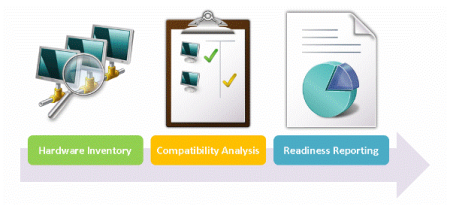
Are you familiar with the Microsoft Assessment and Planning Solution Accelerator (MAP)? If you’re not, you might want to be. From the resources library:

“MAP (download) is a powerful inventory, assessment, and reporting tool that can securely run in small or large IT environments without requiring the installation of agent software on any computers or devices. The data and analysis provided by this Solution Accelerator can significantly simplify the planning process for migrating to Windows Vista, Microsoft Office 2007, Windows Server 2008, Microsoft Application Virtualization (formerly SoftGrid), and Windows Server virtualization technologies including Virtual Server 2005 R2 and Windows Server 2008 Hyper-V.”

Microsoft Assessment and Planning Solution Accelerator

As Virtualization.info points out, Microsoft doesn’t seem to put much effort into making the tool known by the rest of the world. The tool could however be useful, and comes at a great price considering its feature list; it’s completely free!

Filed Under: News Tagged With: Assessment and Planning Solution Accelerator, Hyper-V, HyperV, microsoft, Microsoft Assessment and Planning Solution Accelerator, Microsoft Hyper-V, Microsoft MAP, virtualisation, virtualization, virtualization capacity planning

Hyper-V Quick Migration Breaks Network Connections, Says VMware

April 21, 2008 by Robin Wauters 2 Comments

Check out the following demo by Blip.tv account ‘VMware TV‘, expressing the difference between moving a VM from one physical server to another with downtime (Hyper-V Quick Migration) and VMware’s Vmotion, which offers zero downtime when transferring virtual machines.

Keith Ward over at Virtualization Review picked up the demo and writes about what happens in the video:

“The demo shows a Quick Migration of a Windows Server 2003 VM from one physical machine to another. At the same time, a Microsoft Dynamics client is trying to access a database residing on the VM. Through a constant ping of the VM, we can see how a) the connection to the VM is dropped for a time, and b) how the Dynamics client fails in its attempt to get the database information (an error box pops up, showing a TCP failure). Shortly thereafter, another popup informs us that the VM has actually been deleted. It’s re-started a few moments later.”

To be balanced, here’s what ‘Jeff’ recently posted on the Windows Virtualization Team blog:

After my last blog I received almost two dozen email telling me that VMotion was far superior for unplanned host downtime and that it was a much better HA solution because it could live migrate virtual machines. I’ve heard this fallacy espoused for many years and, folks, this simply isn’t the case.

In the case of unplanned downtime, VMotion can’t live migrate because there is no warning. Instead you must have VMware HA configured and the best it can do is restart the affected virtual machines on other nodes which is the same as what is provided with Windows Server 2008 Hyper-V and Failover Clustering.

Here are a couple of quotes from VMware’s own document, Automating High Availability (HA) Services with VMware HA.

Page 1 paragraph 2 states:

Using VMware HA, virtual machines are automatically restarted in the event of hardware failure…

Page 8 states:

How does VMware HA work?

VMware HA continuously monitors all ESX Server hosts in a cluster and detects failures. An agent placed on each host maintains a “heartbeat” with the other hosts in the cluster and loss of a heartbeat with the other hosts in the cluster and loss of a heartbeat initiates the process of restarting all affected virtual machines on other hosts.

HA monitors whether sufficient resources are available in the cluster at all times in order to be able to restart virtual machines on different physical host machines in the event of host failure.

The point being VMware HA and Hyper-V with failover clustering accomplish the same thing: virtual machines are RESTARTED on another node. No better, no worse. If you still don’t believe me, find one of your ESX Servers and go pull out the power plug. (Just don’t say I didn’t warn you.)

So what do you think about all this?

Filed Under: News Tagged With: Hyper-V, Hyper-V Quick Migration, Hyper-V RC, HyperV, live migration, microsoft, Microsoft Hyper-V, Quick Migration, virtualisation, virtualization, VMotion, vmware, VMware VMotion

EMA Research on Virtualization: VMware Still Leading The Pack, Microsoft And Citrix Following Closely

April 17, 2008 by Robin Wauters Leave a Comment

Enterprise Management Associates (EMA), a US-based IT management research and consulting firm, today announced the release of its latest research report titled, “Virtualization and Management: Trends, Forecasts and Recommendations.”

EMA

“The promise of IT virtualization continues to be significant as it rightfully gains traction across servers, desktops, applications, networks, storage and more,” said research director Andi Mann. “This latest research report identifies what is really happening within the exploding virtualization marketplace, the impact it is having on IT professionals and the technology options that are available today.”

When looking across all virtualization technologies, Enterprise Management Associates’ research shows that VMware still has the highest overall market penetration. However, Microsoft continues to grow its market share and — even before the formal release of Hyper-V — is within 10 percent of VMware’s lead. Citrix also poses a threat, coming in at 20 percent behind VMware, again with major product yet to be formally released.

Mann believes desktop virtualization will show the strongest growth of any virtualization technology during the next one to two years. However, the overall virtualization market will continue to be very healthy because, as this research reveals, enterprises are seeing substantial benefits in cost reduction, server consolidation, security improvement and more from virtualization technologies. The EMA study also clearly shows that virtualization is not just a test and development tool, finding that up to 75 percent of all enterprises are now using virtualization for production use cases — indicating a steady increase in outcomes and confidence since 2006.

As virtualization proliferates, it will continue to deliver many valuable outcomes. However, most companies will face multiple barriers to success. Enterprise Management Associates’ research shows that the largest challenges facing successful virtualization deployments lie with “human issues.” Key among these are the unique political challenges that virtualization creates as a result of sharing data center resources, shifting responsibility and functionality of desktops or changing the way departments access applications, storage and networks.

In addition, companies face a potential skills crisis as they find it harder to attract and retain virtualization resources. In fact, enterprises have seen a 25 percent decrease in their ability to manage virtual environments adequately with the skills they have in place.

Complexity is also a critical issue in virtualization. EMA finds that the vast majority of organizations implement virtualization on multiple platforms, using multiple technologies, from multiple vendors — adding multiple layers of complexity onto already complex physical systems. This study also shows convincingly that virtualization will not overtake existing architectures at least through 2010. “For the vast majority of enterprises, virtualization will coexist with physical deployments for the foreseeable future, so complexity will continue to be a major headache,” said Mann.

“The key to success is to approach virtualization as a strategy, not just a series of projects, and to approach it with more realistic expectations,” said Mann, “Companies need to adjust their goals, and find ways to deploy and manage virtualization in more effective ways. This report will help them to do exactly that.”

[Source: The Earth Times]

Filed Under: Featured, News Tagged With: Andi Mann, citrix, dekstop virtualization, EMA, Enterprise Management, Enterprise Management Associates, microsoft, virtualisation, virtualization, vmware

  • « Go to Previous Page
  • Go to page 1
  • Interim pages omitted …
  • Go to page 16
  • Go to page 17
  • Go to page 18
  • Go to page 19
  • Go to page 20
  • Interim pages omitted …
  • Go to page 23
  • Go to Next Page »

Primary Sidebar

Tags

acquisition application virtualization Cisco citrix Citrix Systems citrix xenserver cloud computing Dell desktop virtualization EMC financing Funding Hewlett Packard HP Hyper-V IBM industry moves intel interview kvm linux microsoft Microsoft Hyper-V Novell oracle Parallels red hat research server virtualization sun sun microsystems VDI video virtual desktop Virtual Iron virtualisation virtualization vmware VMware ESX VMWorld VMWorld 2008 VMWorld Europe 2008 Xen xenserver xensource

Recent Comments

  • C program on Red Hat Launches Virtual Storage Appliance For Amazon Web Services
  • Hamzaoui on $500 Million For XenSource, Where Did All The Money Go?
  • vijay kumar on NComputing Debuts X350
  • Samar on VMware / SpringSource Acquires GemStone Systems
  • Meo on Cisco, Citrix Join Forces To Deliver Rich Media-Enabled Virtual Desktops

Copyright © 2025 · Genesis Sample on Genesis Framework · WordPress · Log in

  • Newsletter
  • Advertise
  • Contact
  • About