• Skip to primary navigation
  • Skip to main content
  • Skip to primary sidebar
Virtualization.com

Virtualization.com

News and insights from the vibrant world of virtualization and cloud computing

  • News
  • Featured
  • Partnerships
  • People
  • Acquisitions
  • Guest Posts
  • Interviews
  • Videos
  • Funding

Hyper-V

What Should We Ask Steve Ballmer?

April 21, 2008 by Robin Wauters 1 Comment

Upcoming thursday, we’re sitting down with Microsoft CEO Steve Ballmer for a short Q&A session. We have some questions in mind for the man, but we thought it might be a good opportunity to ask you for feedback on what we should ask as well. Anything goes, but please avoid questions that could make him go crazy.

So give it us: what would you ask Steve Ballmer if you had the chance?

Post your question in the comments or get in touch directly.
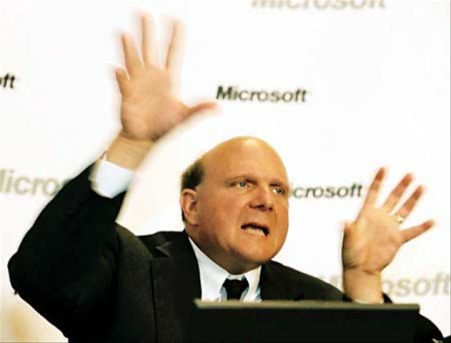
Steve Ballmer

Filed Under: Interviews Tagged With: Hyper-V, HyperV, microsoft, Microsoft Hyper-V, Steve Ballmer, virtualisation, virtualization

Free Virtualization Capacity Planning, Courtesy of Microsoft MAP

April 21, 2008 by Robin Wauters 1 Comment

Are you familiar with the Microsoft Assessment and Planning Solution Accelerator (MAP)? If you’re not, you might want to be. From the resources library:

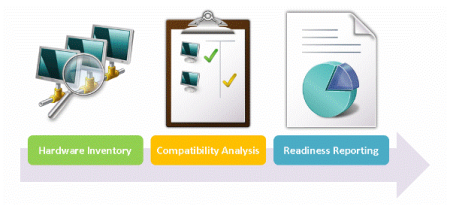
“MAP (download) is a powerful inventory, assessment, and reporting tool that can securely run in small or large IT environments without requiring the installation of agent software on any computers or devices. The data and analysis provided by this Solution Accelerator can significantly simplify the planning process for migrating to Windows Vista, Microsoft Office 2007, Windows Server 2008, Microsoft Application Virtualization (formerly SoftGrid), and Windows Server virtualization technologies including Virtual Server 2005 R2 and Windows Server 2008 Hyper-V.”

Microsoft Assessment and Planning Solution Accelerator

As Virtualization.info points out, Microsoft doesn’t seem to put much effort into making the tool known by the rest of the world. The tool could however be useful, and comes at a great price considering its feature list; it’s completely free!

Filed Under: News Tagged With: Assessment and Planning Solution Accelerator, Hyper-V, HyperV, microsoft, Microsoft Assessment and Planning Solution Accelerator, Microsoft Hyper-V, Microsoft MAP, virtualisation, virtualization, virtualization capacity planning

Hyper-V Quick Migration Breaks Network Connections, Says VMware

April 21, 2008 by Robin Wauters 2 Comments

Check out the following demo by Blip.tv account ‘VMware TV‘, expressing the difference between moving a VM from one physical server to another with downtime (Hyper-V Quick Migration) and VMware’s Vmotion, which offers zero downtime when transferring virtual machines.

Keith Ward over at Virtualization Review picked up the demo and writes about what happens in the video:

“The demo shows a Quick Migration of a Windows Server 2003 VM from one physical machine to another. At the same time, a Microsoft Dynamics client is trying to access a database residing on the VM. Through a constant ping of the VM, we can see how a) the connection to the VM is dropped for a time, and b) how the Dynamics client fails in its attempt to get the database information (an error box pops up, showing a TCP failure). Shortly thereafter, another popup informs us that the VM has actually been deleted. It’s re-started a few moments later.”

To be balanced, here’s what ‘Jeff’ recently posted on the Windows Virtualization Team blog:

After my last blog I received almost two dozen email telling me that VMotion was far superior for unplanned host downtime and that it was a much better HA solution because it could live migrate virtual machines. I’ve heard this fallacy espoused for many years and, folks, this simply isn’t the case.

In the case of unplanned downtime, VMotion can’t live migrate because there is no warning. Instead you must have VMware HA configured and the best it can do is restart the affected virtual machines on other nodes which is the same as what is provided with Windows Server 2008 Hyper-V and Failover Clustering.

Here are a couple of quotes from VMware’s own document, Automating High Availability (HA) Services with VMware HA.

Page 1 paragraph 2 states:

Using VMware HA, virtual machines are automatically restarted in the event of hardware failure…

Page 8 states:

How does VMware HA work?

VMware HA continuously monitors all ESX Server hosts in a cluster and detects failures. An agent placed on each host maintains a “heartbeat” with the other hosts in the cluster and loss of a heartbeat with the other hosts in the cluster and loss of a heartbeat initiates the process of restarting all affected virtual machines on other hosts.

HA monitors whether sufficient resources are available in the cluster at all times in order to be able to restart virtual machines on different physical host machines in the event of host failure.

The point being VMware HA and Hyper-V with failover clustering accomplish the same thing: virtual machines are RESTARTED on another node. No better, no worse. If you still don’t believe me, find one of your ESX Servers and go pull out the power plug. (Just don’t say I didn’t warn you.)

So what do you think about all this?

Filed Under: News Tagged With: Hyper-V, Hyper-V Quick Migration, Hyper-V RC, HyperV, live migration, microsoft, Microsoft Hyper-V, Quick Migration, virtualisation, virtualization, VMotion, vmware, VMware VMotion

Hyper-V Release Candidate Now (Optional) Part Of Windows Update

April 9, 2008 by Robin Wauters 1 Comment

In a post on the WSUS Product Team Blog, Program Manager Cecilia Cole lets us know that the Hyper-V RC is now an optional part of Windows Update.

Today, April 8, the Windows Update team is making the Hyper-V Release Candidate package available as an “Optional Update” via Windows Update for all Windows Server 2008 SKUs. It will also be published as an “Optional Update” to WSUS. For more detailed instructions, please refer to How to Install Windows Server 2008 Hyper-V Release Candidate.

For more information about the availability of new and changed updates available for WSUS, please visit our TechNet site under “WSUS Updates”.

[Source: Dugie’s Pensieve]

Filed Under: News Tagged With: Cecilia Cole, Hyper-V, Hyper-V RC, Hyper-V Release Candidate, HyperV, microsoft, Microsoft Hyper-V, virtualisation, virtualization, Windows Update, WSUS

Citrix Releases XenServer 4.1, Simplifies Pricing Policy

April 1, 2008 by Robin Wauters Leave a Comment

This sure took a while: Citrix finally upgraded XenServer yesterday with the 4.1 release, adding some 50 new features for the first major version upgrade since Citrix acquired XenSource last August.

Citrix XenServer 4.1

Some of the most compelling new capabilities:

  • XenMotion: Seamlessly move virtual machines without downtime
  • XenCenter: Unified virtualization management interface, including servers, storage and networking
  • Native 64-bit hypervisor: Scalability and support for enterprise applications
  • Resource Pools: Efficient configuration, allocation and authentication for virtualization resources
  • XenAPI: Integration with existing management invesments, infrastructure and processes

But it’s the change in pricing policy, which it dubs ‘groundbreaking‘, that deserves a closer look the most: with the release of 4.1, the company is moving away from counting sockets to charging on a per-physical server basis for all XenServer editions. Citrix claims this should let customers have an unlimited number of virtual machines or guest operating systems running on a server for the same price.

XenServer starts at $ 600 per server for an annual license, and $ 900 per server for a perpetual license. Customers using the old pricing structure will need to wait until their current licenses run out before making the change. The new pricing applies to all industry standard 64-bit servers with up to four CPU sockets.

Curious to see if VMware will change its pricing strategy too, and if Microsoft will adapt accordingly (both VMware as Windows Server 2008 Data Center edition with Hyper-V will be charged on a per-processor basis).

Filed Under: News Tagged With: citrix, citrix xenserver, Hyper-V, microsoft, virtualisation, virtualization, vmware, Windows Server 2008 Data Center, XenAPI, XenCenter, XenMotion, xenserver, XenServer 4.1, xensource

Microsoft To CIOs: “Virtualization Is Too Expensive”

March 17, 2008 by Robin Wauters 1 Comment

At the European CIO summit, Barbara Gordon, Microsoft’s EMEA VP for Enterprise Sales stated that Microsoft sees price as a differentiator in the virtualization market.

“What I hear is that users need to take out cost from their environments and virtualization is the credible approach. You have to ask if virtualization today is delivering cost effective value? And that it justifies the costs that are being charged?” She added, “Price is a differentiator. Existing players are quite expensive. Microsoft can add value to this market with a server play and an application play.”

Asked if the Microsoft Hyper V would have different versions that would offer different levels of functionality similar to those offered by VMware Gordon would not be drawn, according to Australian PC World.

“The time of individual point products is lessening. Our approach will be take a look at the environment, and make sure that the right virtualization functionality fits that environment. The fact is that it is the technologies that work well together and have good functionality that will let the user spend time adding value. So we’ve got a very broad offering.”

Martin Niemer, Senior Product Marketing Manager at VMware (yes, also the one that said Dell would soon start shipping servers with VMware ESX Server 3i included free of charge, said:

“We’re not seeing any signs that customers don’t understand all of the issues associated to moving to virtualization. They understand that what it comes down to is that even the hyper visor is zero cost, which Hyper V won’t be, the question is how many virtual machines can you run on a server. If you can’t run that many you still have to run it on two servers and that doubles your cost. That’s really going to be the decision point. It depends on what users want. If you want basic partitioning you can buy a server with a Vmware ESX 3i integrated hyper visor or buy a foundation version of ESX. And if you want additional functionality such as high availability you can buy a slightly more expensive licence.”

Niemer said he didn’t foresee Vmware being forced to adjust its pricing when Hyper V came to market.

We’ll see.

Filed Under: News, People Tagged With: Barbara Gordon, European CIO summit, Hyper-V, Martin Niemer, microsoft, MS, virtualisation, virtualization, vmware, VMWare ESX Server, VMware ESX Server 3i

  • « Go to Previous Page
  • Go to page 1
  • Interim pages omitted …
  • Go to page 9
  • Go to page 10
  • Go to page 11
  • Go to page 12
  • Go to Next Page »

Primary Sidebar

Tags

acquisition application virtualization Cisco citrix Citrix Systems citrix xenserver cloud computing Dell desktop virtualization EMC financing Funding Hewlett Packard HP Hyper-V IBM industry moves intel interview kvm linux microsoft Microsoft Hyper-V Novell oracle Parallels red hat research server virtualization sun sun microsystems VDI video virtual desktop Virtual Iron virtualisation virtualization vmware VMware ESX VMWorld VMWorld 2008 VMWorld Europe 2008 Xen xenserver xensource

Recent Comments

  • C program on Red Hat Launches Virtual Storage Appliance For Amazon Web Services
  • Hamzaoui on $500 Million For XenSource, Where Did All The Money Go?
  • vijay kumar on NComputing Debuts X350
  • Samar on VMware / SpringSource Acquires GemStone Systems
  • Meo on Cisco, Citrix Join Forces To Deliver Rich Media-Enabled Virtual Desktops

Copyright © 2025 · Genesis Sample on Genesis Framework · WordPress · Log in

  • Newsletter
  • Advertise
  • Contact
  • About