• Skip to primary navigation
  • Skip to main content
  • Skip to primary sidebar
Virtualization.com

Virtualization.com

News and insights from the vibrant world of virtualization and cloud computing

  • News
  • Featured
  • Partnerships
  • People
  • Acquisitions
  • Guest Posts
  • Interviews
  • Videos
  • Funding

Archives for July 2008

Virtualization.com Contest: Guess What’s on Werner Vogels’ Mind and Win A Book

July 31, 2008 by Toon Vanagt 2 Comments

Aside from interviewing Werner Vogels at the GigaOM Structure 08 conference, we asked him to dedicate an O’Reilly book on the Amazon Web Services, which we will give away in the contest we’re introducing today. First, watch the video below.


Win O’Reilly’s Programming Amazon Web Services: S3, EC2, SQS, FPS and SimpleDB

Second, follow these simple rules for our summer contest: up until the 15th of August, you can guess what Vogels has written in this book and provide your answer in the comments below. You don’t necessarily have to get it right, but the funniest, most original, most in-depth or closest comment on this post will be picked out by our editors on the 15th of August 2008. The lucky winner will get a free copy of O’Reilly’s Programming Amazon Web Services: S3, EC2, SQS, FPS, and SimpleDB (Programming), with the hand-signed note from Amazon’s CTO Werner Vogels inside!

If you are really creative, we throw in a second freeby, for the funniest fake job title. Get inspired by “Werner Vogels, System Admin at a Small Bookshop (aka CTO Amazon)”

Make your educated guess or just be funny and don’t forget to include your e-mail address (not shown) so we can contact you afterwards and get your book delivered.

Filed Under: Featured, Interviews, People Tagged With: Amazon, book, contest, ec2, FPS and SimpleDB, O'Reilly, Programming Amazon Web Services, Programming Amazon Web Services S3, SQS, virtualisation, virtualization, Werner Vogels

Video Interview: Werner Vogels, CTO Amazon on Virtualization and the VC Threat

July 31, 2008 by Toon Vanagt 8 Comments

At the GigaOM Structure08 conference in San Francisco, we had the opportunity to question Amazon’s CTO Werner Vogels on his virtualization experience, while building the Amazon cloud. He confirmed Amazon Web Services are still powered by Xen hypervisors.

It is remarkable to hear the CTO of a multinational openly thank the open source community for their active support on Xen and hear him claim this to be the main reason for having chosen Xen as a crucial Amazon cloud-enabling building block.


Werner Vogels CTO Amazon.com from Toon Vanagt on Vimeo.

As we reported earlier, Amazon is also very open on its performance and welcomes independent companies to measure and report on parameters for public virtual computing facility such as security, availability, scalability, performance and cost.

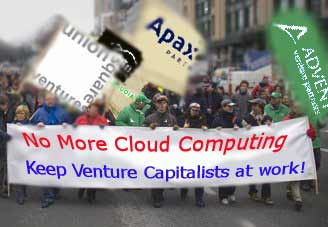
Werner finished our video interview by explaining why cloud computing is even disruptive outside of the datacenter and transforms unexpected industries. Venture capitalists seem upset about side effects, such as start-up funding independence, as these fast growing tech companies are no longer in need to burn lots of VC-money on hardware platforms and technologies upfront. They can now scale their offering dynamically, driven by organic growth, while generating the necessary revenues to cover the extra cloud cost.

At Virtualization.com we like to think that “shift happens” and look forward to the upcoming VC-riots on Sand Hill Road against these unthankful self-sufficient start-ups 🙂

A full transcript of the interview is below. If you are interested in Amazon Web Services, you might also want to participate in our contest to win a free book, dedicated by Werner Vogels.


(00:00) Werner Vogels, welcome on Virtualization.com. You are the system administrator of a small bookshop. Could you tell us something more about yourself and on how you virtualized your infrastructure to such a dimension.

“I am the Chief Technology Officer for Amazon.com and I am responsible for the long term vision for technology within Amazon as well as how we can develop radically new technologies to support that business. But also the kind of businesses Amazon could move into, because of the unique technologies that we have developed.”

(00:33) Werner, I am a bit puzzled, because I did an interview with Xen founder Ian Pratt and he told me that Amazon is using this extensively. In your keynote here at the GigaOm Structure08 conference you just claimed you’re using no more third party applications. Did you refer to Xen in that respect?

“My remark about third parties applications was more about our enterprise stuff, where you look at databases and middleware… We do use some third party software and Xen is one of those. But we use them in the mode everybody in this world is using them. We don’t put these types of technologies to the extreme, because we want to make sure their vendors can support us, in a way they support any other customer they have. The remark I made this morning was more about when you really start pushing technology to the edge, we cannot blame vendors for not being able to support us.”

(1:30): How hard was it to integrate the Xen hypervisor into your cloud platform?

“I think Xen is a great product. It is easy to use. But most importantly is the very active community around it. I would not say many ‘issues’ around using Xen, but ‘challenges’ are addressed there with the things every virtual machine has to deal with. Things such as: I/O-issues, guaranteed scheduling issues, domain zero security concerns,…The community out there is very helpful. That was a very big reason for us in selecting Xen.”

(02:15) With “Security”, you just mentioned one of the big Virtualization issues at stake. How do you make absolutely sure that VM’s are isolated in a mixed customer cloud environment? Is Amazon using VLans to do achieve that or did you design proprietary solutions or techniques you can share with the community?

“It is our policy not to discuss specific security techniques. Except for that we have done extensive software development. To make sure that we can audit, maintain and manage the security issues.”

(02:45) You see this as one of your competitive advantages?

I like to believe that security is one of the main concerns and you have to address those upfront. There is no excuse. In this world of cloud computing the most fundamental promise needs to be that it is secure!

(03:10) Yesterday CloudStatus was launched and I imagine you are aware of this? Is Amazon happy about that?”

Absolutely, we love them. But I want to take a step back there. It is very important with things like CloudStatus, that they are actually reporting on things that make sense for our customers. So we are looking forward to working with them and to bring them into contact with our customers and to make sure that the things they are reporting on are useful to our customers…”

(03:40) You would like to advice CloudStatus on the Amazon parameter set they should be reporting on?

“It is up to them off-course. This is not going to be a winner take all business as there will be many cloud providers in the future. As I mentioned in my talk, we will be measured on security, availability, scalability, performance and at cost. So it is very important that we have independent companies measuring these kind of things.”

(04:18) When you talk about independent companies and open alternatives, one of the general concerns remains vendor lock-in. With Eucalyptus there is an open source equivalent, which sort of reverse engineered your APIs (Application Programming Interfaces) and is compliant with Amazon. Do you think that these options of knowing you can in-source your cloud if needed, helps to comfort prospective companies in selecting a cloud provider?

“Let’s first start of with the notion of vendor lock-in. As I mentioned in my talk, I like to believe that Amazon works very hard to provide APIs, which are so simple that there is hardly any vendor lock-in. We use standard techniques to give people access to our APIs. If you look at Eucalyptus, their need came out the schools, involved in high performance computing, on the one hand want to use the public cloud for doing parallel computing, but on the other hand one to keep a similar interface internally. I think they have been very successful to actually make sure that all these schools  adopt this same model.”

(05:32) A last question on your disruptive cloud platform. Could you explain how this technology also disrupts start-up funding cycles and the move from the CAPEX to OPEX expense models? [A capital expenditure (CAPEX) is the cost of developing or providing non-consumable parts for a product, service or system. Its counterpart an operating expense (OPEX) is an on-going cost for running that product]

“Last night I was at a reception, where a venture capitalist walked up to me, who said he hated Amazon, because we killed his business. After we talked for a while, he actually had to confess they also have to adapt to this new world. Where in the old world, they could lock themselves into a company; get their hand on a large part of the equity, because those companies had to spend a lot of money on resources upfront. What we see now is that the availability of these services makes companies start to think differently. Before start-ups maybe had the idea that the only way they could be successful was to have a very big exit. For that they needed a lot of hardware and lots of investments. Many companies based on the fact that these services are available are now moving to a model, where they think they can build a sustainable business. Maybe we can build great products and charge our customers for it. And if you then attract more customers, you spend more on the (development) of these services. Which is just fine as your income follows your customer needs.”

Amazon

Filed Under: Funding, Interviews, People, Videos

Release: VMware Fusion 2.0 Beta 2

July 31, 2008 by Robin Wauters 1 Comment

VMware introduced their latest Beta build of their Apple Mac virtualization product, VMware Fusion 2.0 Beta 2, nearly three months after releasing the Beta 1 build. The new release is focused on several key areas, mainly to improve the user experience with updated video, data protection and Unity capabilities.

VMware Fusion 2.0 will be made available free to owners of VMware Fusion 1.x.

A rundown of the new features:

  • Multiple Snapshots
    • Save your virtual machine in any number of states, and return to those states at any time
    • Automatically take snapshots at regular intervals with AutoProtect
  • File and URL Sharing
    • Share applications between your Mac and your virtual machines
    • Finder can now open your Mac’s files directly in Windows applications like Microsoft Word and Windows Media Player
    • VMware Fusion can configure virtual machines to open their files in Mac applications like Preview and iTunes
    • Click on a URL in a virtual machine and open it in your favorite Mac browser, or configure your Mac to open its links in a virtual machine
    • Map key folders in Windows Vista and Windows XP (Desktop, My Documents, My Music, My Pictures) to their corresponding Mac folders (Desktop, Documents, Music, and Pictures)
    • Greatly improved reliability of shared folders—now compatible with Microsoft Office and Visual Studio
  • Experimental Support for Mac OS X Server Virtual Machines
    • You can create Mac OS X Server 10.5 virtual machines (experimental support). Due to Apple licensing restrictions, the standard edition of Mac OS X 10.5 is not supported in a virtual machine
  • Display Improvement
    • Improved 3D support
    • Use 1080p full high definition video in Windows XP or Windows Vista
    • Freely resize your virtual machine?s window and enter and exit Full Screen view while playing games
    • Run Linux applications directly on your Mac?s desktop under Unity view
  • UI Improvements
    • The New Virtual Machine Assistant has Linux Easy Install in addition to Windows Easy Install
    • Cut and paste files up to 4 MB, including graphics and styled text
    • Status icons glow when there is activity
    • A screen shot of the last suspended state of a virtual machine is displayed in Quick Look and Cover Flow
    • You can remap keyboard and mouse input
    • Keyboard compatibility between the Mac and the virtual machine is improved
    • The vmrun command line interface is available for scripting
  • Broader Hardware and Software Support
    • VMware Fusion supports Ubuntu 8.04 Hardy Heron
    • VMware Fusion supports 64-bit Vista Boot Camp; handles activation for Microsoft Office 2003 and Office 2007
    • Experimental support for 4-way SMP (note: Windows Vista and Windows XP limit themselves to two CPUs)
  • Support for Virtual Hard Disks
    • You can mount the virtual disk of a powered-off Windows virtual machine using VMDKMounter (Mac OS X 10.5 or higher)
    • You now have the ability to resize virtual disks

Here’s a demo video the VMware team put out:

VMware

[Source: VMBlog]

Filed Under: Featured, News Tagged With: Apple, Apple virtualization, Fusion, Fusion 2.0, Fusion 2.0 Beta 2, Mac, Mac virtualization, virtualisation, virtualization, vmware, VMWare Fusion, VMWare Fusion 2.0, VMware Fusion 2.0 Beta 2

There We Go Again: EMC Shares Rise On Acquisition Rumors

July 31, 2008 by Robin Wauters 1 Comment

This is one rumor that just keeps coming back: Reuters is reporting that EMC shares rose as much as 6.3 percent yesterday on market speculation that the world’s largest maker of corporate storage equipment could be acquired. The company stills holds a majority stake in virtualization juggernaut VMware.

Shares of EMC rose as high as $14.92 in trade on the New York Stock Exchange, before retreating to $14.75 in afternoon trading.

EMC spokesman Dave Farmer declined to comment, saying the company never responds to market rumors or speculation. Pacific Growth Equities analyst Kaushik Roy said the most likely company to be interested in buying EMC would be Cisco Systems. Last May, we reported on rumors of a possible merger.

A popular phrase says there is fire where there is smoke, but we’re getting a bit skeptical. These rumors have been floating for years now, and although a Cisco-EMC combo would seem like a pretty logical combination, you can ask yourself if it why a deal would be in the works now, when a merger or full acquisition should have already happened if both companies and their shareholders agreed.

EMC Corporation

Cisco Systems

Filed Under: Acquisitions, Featured, Rumors Tagged With: acquisition, Cisco, Cisco Systems, EMC, EMC Corp, merger, virtualisation, virtualization, vmware

DataSynapse Extends Dynamic Service Management Tools for VMware Infrastructure Support

July 30, 2008 by Robin Wauters Leave a Comment

DataSynapse, maker of dynamic application service management software, today announced that it is working with VMWare to provide customers with simplified deployment and operational management of application platforms and services to facilitate always-on, always-responsive virtualized applications.

As a member of the VMware Technology Alliance Partner (TAP) program, DataSynapse plans to integrate its FabricServer dynamic application service management software specifically with VMware VirtualCenter. This integration will allow IT organizations to automate deployment and provisioning and optimize service levels of server applications in a virtualized infrastructure, helping them to reduce capital and operating costs while delivering order of magnitude improvement in time to market for critical business applications.
DataSynapse FabricServer software is an enabling platform for standardizing and automating the configuration, activation, scaling and aligning application service levels with planned business policies, which minimizes downtime, automates service level management and improves enterprise application performance. Combined with VMware VMotion technology, VMware’s live migration capability, FabricServer provides responsive horizontal scalability.
DataSynapse

Filed Under: News, Partnerships Tagged With: DataSynapse, DataSynapse FabricServer, Dynamic Service Management, FabricServer, virtualcenter, virtualisation, virtualization, VMotion, vmware, VMware Infrastructure, VMware Technology Alliance Partner, vmware virtualcenter, VMware VMotion

Veeam Releases Backup 2.0 for VMware Infrastructure

July 30, 2008 by Robin Wauters 1 Comment

—

Veeam Software today announced general availability of Veeam Backup 2.0, a product offering both backup and replication for virtual environments. Version 2.0 includes added functionality, as well as a new optimized backup engine that allows for up to five times faster backup and replication performance than the 1.0 version.

Major new features in Veeam Backup 2.0 include:

  • Five times faster — Veeam Backup 2.0 has a new optimized backup
    engine, which allows for up to five times faster backup and replication
    performance than the previous version.
  • Windows Volume Shadow Copy Service (VSS) support — Veeam Backup 2.0
    leverages VSS to ensure consistent backup and recovery of VSS-aware
    applications, including Active Directory, Microsoft Exchange and Microsoft
    SQL Server.
  • ESXi support — Now customers can back up ESXi servers using VMware
    Consolidated Backup (VCB). File-level recovery is fully supported for
    guests running on ESXi, and full image restore is supported to ESX 3.x
    servers. These images can then be VMotioned to ESXi as needed.
  • Enhanced reporting and notification — Comprehensive real-time job
    statistics are available, including automated e-mail notification of backup
    job status, activity and performance details.
  • Backup portability — Veeam Backup users can now easily import backups
    made using previous versions of the software, or backups that have been
    archived to tape.
  • Support for third-party tape backup systems — Now users can specify a
    script to automatically run when the VMware backup is finished, initiating
    tape backups to begin.

Veeam Backup 2.0 is available immediately, and pricing still begins at $499 USD per socket.

Veeam

[Source: MarketWire]

Filed Under: News Tagged With: backup, Backup 2.0, replication, restore, Veeam, Veeam Backup 2.0, Veeam Backup Version 2.0, Veeam Software, virtualisation, virtualization, vmware, VMware Infrastructure

  • Go to page 1
  • Go to page 2
  • Go to page 3
  • Interim pages omitted …
  • Go to page 16
  • Go to Next Page »

Primary Sidebar

Tags

acquisition application virtualization Cisco citrix Citrix Systems citrix xenserver cloud computing Dell desktop virtualization EMC financing Funding Hewlett Packard HP Hyper-V IBM industry moves intel interview kvm linux microsoft Microsoft Hyper-V Novell oracle Parallels red hat research server virtualization sun sun microsystems VDI video virtual desktop Virtual Iron virtualisation virtualization vmware VMware ESX VMWorld VMWorld 2008 VMWorld Europe 2008 Xen xenserver xensource

Recent Comments

  • C program on Red Hat Launches Virtual Storage Appliance For Amazon Web Services
  • Hamzaoui on $500 Million For XenSource, Where Did All The Money Go?
  • vijay kumar on NComputing Debuts X350
  • Samar on VMware / SpringSource Acquires GemStone Systems
  • Meo on Cisco, Citrix Join Forces To Deliver Rich Media-Enabled Virtual Desktops

Copyright © 2026 · Genesis Sample on Genesis Framework · WordPress · Log in

  • Newsletter
  • Advertise
  • Contact
  • About